Glossary
Wudu
Ritual washing associated with preparation for prayer. A washing facility is not a religious court or a mechanism for imposing law on other people.
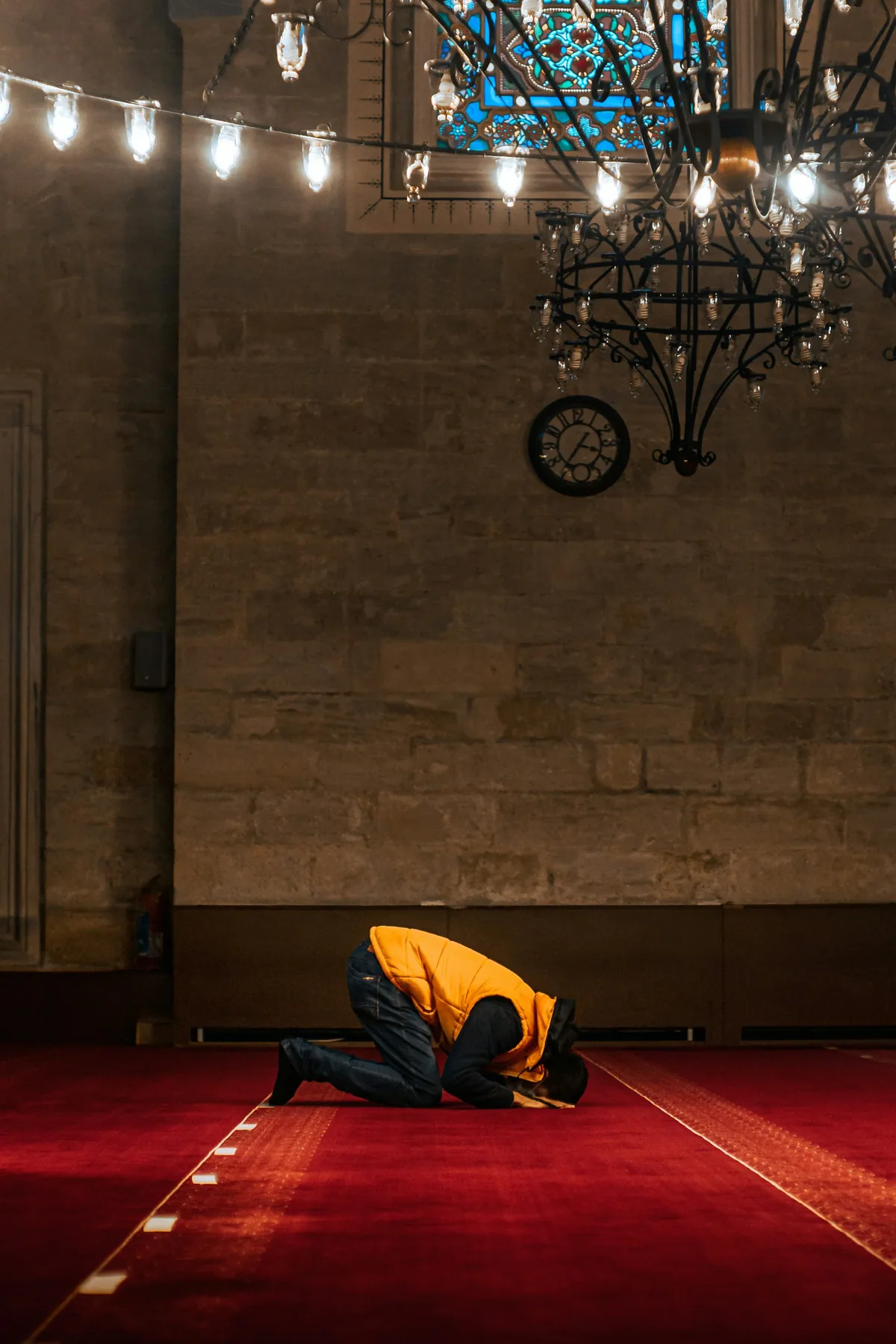
Wudu is ritual washing associated with preparation for prayer. Qur’an 5:6 describes washing and wiping specified parts of the body in that context and addresses circumstances requiring alternatives. For a reader encountering the term in a story about facilities, the essential point is concrete: people need a practical way to wash before worship.[1]
Preparation, not public authority
The existence of a place to wash does not confer legal power on anyone. A foot-washing fixture, sink or designated area is not a court, police institution or change to the civil code. A consequential claim about public facilities needs to identify what was installed, who may use it, what it costs and which rules apply.
This distinction does not end discussion about a publicly managed building. Questions about equal access, budgets, design and maintenance can be legitimate. They should be evaluated with documents and comparable standards rather than the assumption that meeting a Muslim user’s practical need must constitute religious domination.
What the practice does and does not establish
The washing has a religious purpose, but a photograph cannot tell an observer whether someone has fulfilled every requirement according to a particular interpretation. Nor does use of a facility establish citizenship, immigration status or political allegiance. A person should not become the representative of an entire controversy simply because a camera captures a routine action.
Religious interpretations include details about circumstances and what invalidates or renews ritual preparation. An introductory glossary does not replace instruction from a qualified source. It explains the function sufficiently for a neighbor or journalist to understand why the facility is requested.[1]
A real Texas example needs its real facts
Public arguments over airport washing facilities in Texas illustrate how quickly a physical accommodation can be framed as a much larger ideological issue. An accurate report should distinguish the officials’ allegations, the facility operator’s explanation, any investigation and an actual legal finding. The existence of an announced probe is not itself proof of misconduct.[2]
The correct response is not to assume the answer because a practice is religious. It is to read the relevant policies and describe who is affected. Is use voluntary? Are comparable needs addressed? What authority made the decision? Those questions allow the public issue to be discussed without assigning motives to every traveler who uses the space.
Practical understanding
Mosque architecture often includes areas for ablution. A visitor can ask the host about their use and about accessible arrangements rather than rely on assumptions from another building. A directory should record a verified accessibility feature only when its source supports the statement.[3]
Wudu belongs to preparation for prayer. Translating the term and explaining the fixture reduces confusion without requiring theological agreement. People can disagree about a policy and still describe the practice accurately. Calling a washing area a foothold for foreign law does not provide the missing evidence; it changes an ordinary physical need into an accusation the underlying facts may not sustain.