Glossary
Mosque / Masjid
A mosque, or masjid, is a Muslim place of worship. Architecture and community services vary; a dome or minaret is not required.
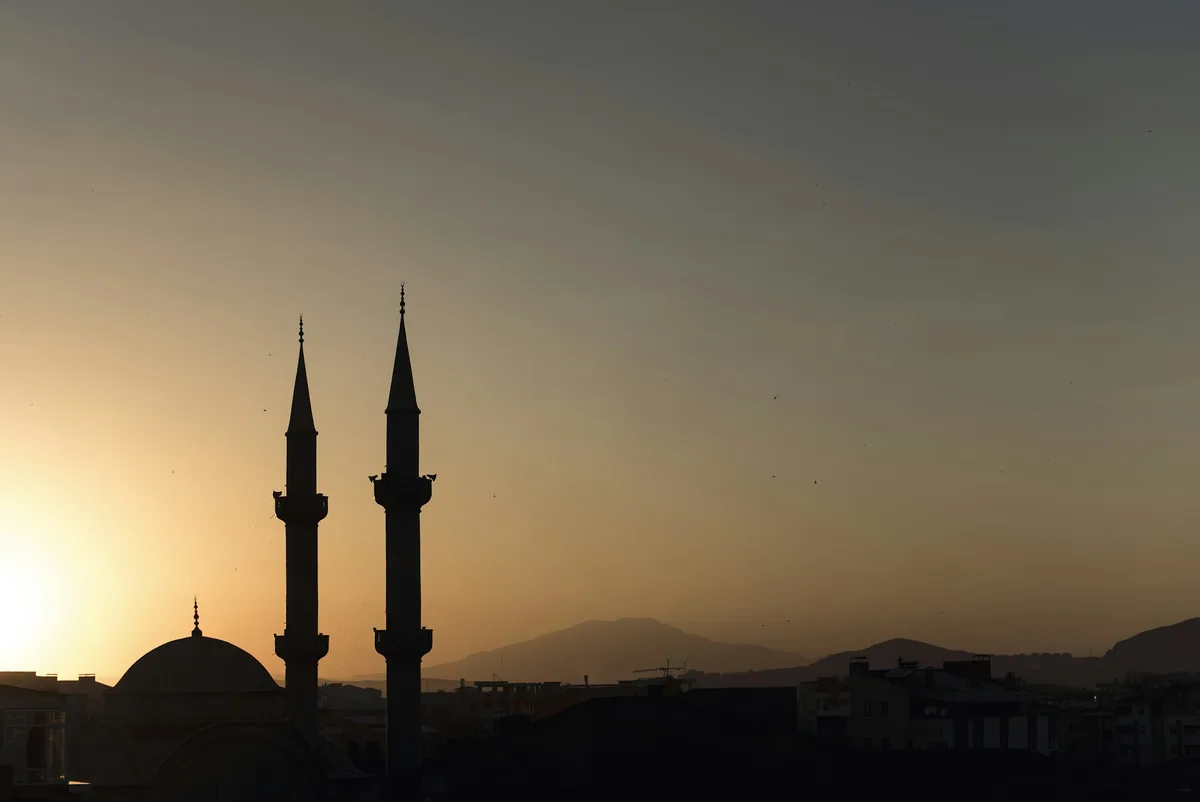
A mosque is a Muslim place of worship; masjid is the Arabic term, associated with a place of prostration. Its central activity is prayer, although an institution may also host teaching, charitable work and community gatherings. Architectural forms vary. A dome or minaret may be present, but neither is a reliable test of whether a building functions as a mosque.[1]
Reading the building
A prayer hall commonly provides an open area where worshippers form rows. A mihrab marks the direction of prayer toward Mecca; a minbar is associated with the sermon. Washing facilities support preparation for prayer. These features have religious functions, not evidentiary value as signs of a separate government. Buildings adapt them to their space, history and community.[1]
A converted commercial property and a purpose-built complex can therefore serve the same basic purpose. Size does not establish attendance, finances or membership. Those questions require records and inquiry. Photographs should identify the actual place rather than using an impressive overseas building to illustrate a Texas congregation.
A place and its operator
A directory must distinguish an organization from its locations. One association can manage multiple centers; an office and prayer space can share an address. Several names may refer to one building. Counting every alias separately inflates the registry, while treating every association as a single building loses useful information.
The Islamic Society of Greater Houston’s center directory illustrates these relationships. It identifies listed locations connected with the organization. Texas Muslim records such relationships using source links and does not claim that a partial directory counts every Muslim institution in the state.[2]
Neighbors and public rules
Parking, traffic, construction and access questions should be addressed through the actual proposal and applicable standards. Federal religious-land-use protections address specified burdens and discriminatory treatment; they do not exempt every religious project from every zoning rule. The Department of Justice’s RLUIPA materials explain that distinction.[3]
A visitor should confirm arrangements with the mosque, especially for a service or tour. The host can explain shoes, dress, photography and movement through prayer areas. Do not assume every facility offers the same access features or visiting hours. Asking is more useful than treating a generic checklist as universal custom.
A mosque can be examined as an institution without making its existence an accusation. Who operates it? What does it provide? How are its claims documented? Those are normal community questions. Describing a building as an outpost or foothold adds a political interpretation that requires evidence of its own.
The plain account is often sufficient: a place where people worship, with possible additional community functions. If an actual dispute exists, describe it accurately. If a reader is searching for a nearby prayer space, help them find reliable information. In both cases, the purpose of the directory is to make the institution easier to understand, not to turn ordinary religious infrastructure into a mystery or a proxy for a foreign conflict.