Opinion · Analysis
Brandon Gill Doesn’t Know Beans About Texas Muslims
Dinesh D’Souza helped bankroll his political rise. AIPAC’s PAC subsequently backed his campaign. But the congressman’s claims about Muslim belonging run into a stubborn obstacle: the history of Texas itself.
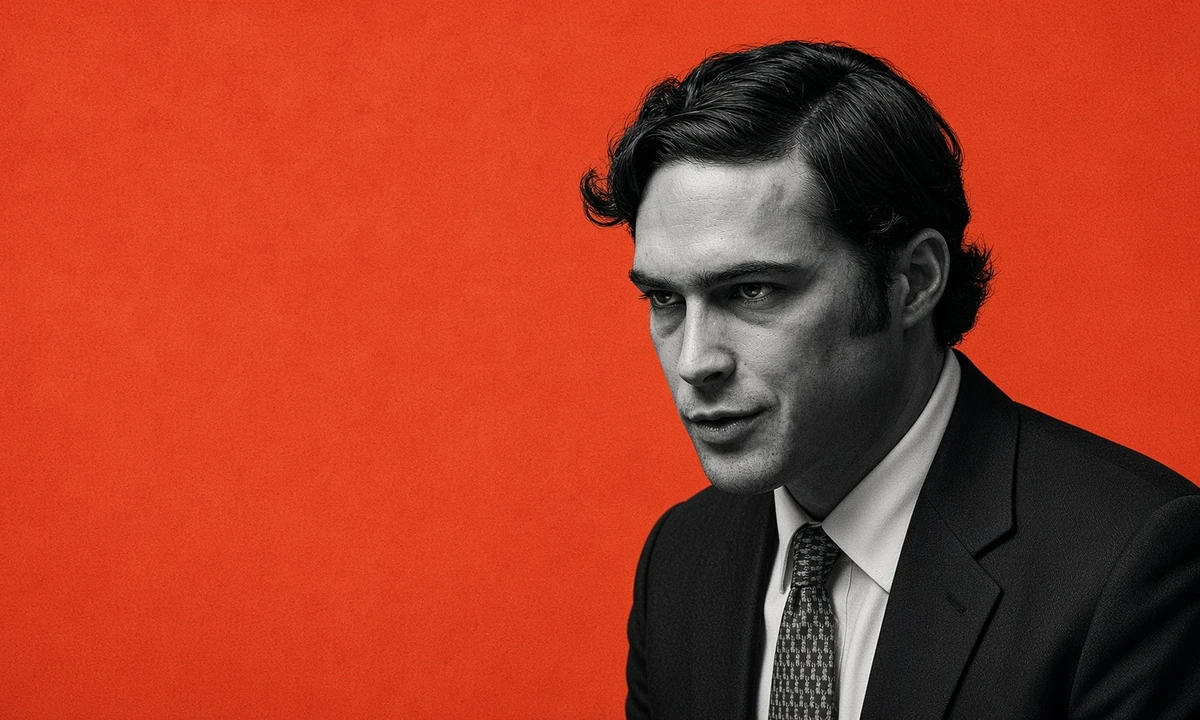
Brandon Gill has an unusual way of assessing whether a Texas community is doing all right: consider whether the shopping mall feels sufficiently unlike Pakistan. In February 2026, the congressman described constituents’ concerns about Dallas-area malls where “it feels like you’re in Pakistan, not Dallas, Texas, that’s a problem.” His comments also invoked anxieties about nearby mosques. The comparison turned the cultural appearance of ordinary public life into an alarm about the future of Texas. [1]
But what, exactly, was the offense? A mosque on the landscape? A family whose clothes looked unfamiliar? A language heard between the shoe store and the parking lot? None of those observations can establish somebody’s citizenship, political beliefs, respect for the law, or length of residence. They establish only that the observer noticed a difference. There are serious questions a representative can ask about immigration, public safety, religious institutions, or the use of government power. Those questions deserve evidence and answers. A resemblance to another country is not evidence of wrongdoing, however. It is a description of somebody’s discomfort.
For Muslim Texans, the distinction matters. We can answer a specific allegation. It is considerably harder to answer an accusation whose entire substance is that our presence makes somebody feel less at home.
Muslim North Texas was here before the campaign talking points
Start with two dates that belong in any discussion of Islam in North Texas. The Islamic Association of North Texas dates its establishment to 1969. The association describes a community organized around worship, education, a medical clinic, youth activities, funeral services, financial assistance, and outreach. These are recognizable functions of a religious institution, not evidence of a competing government. [2]
The Islamic Society of Denton opened its mosque in August 1981, according to its institutional history. It credits local residents, including students at the University of North Texas and Texas Woman’s University, with helping build it. Those are local people, local institutions, and a history measured in decades. [3]
Gill settled in North Texas in late 2022, according to the Texas Tribune. His Texas upbringing is genuine: he grew up on a cattle ranch near Abilene before attending Dartmouth and pursuing a career outside the state. Returning to Texas did not make him an impostor, and nothing about this argument requires pretending that it did. It does suggest that he arrived in a region whose Muslim history was already well underway. [4]
That history does not mean every Muslim family has lived here for generations. Nor does it mean population growth is imaginary. It means that treating Muslim institutions as an alien presence intruding upon an otherwise settled North Texas identity leaves out the people who helped make the region what it is. The dates are useful evidence against the story of sudden intrusion. They are not a waiting period for civil rights. A mosque established yesterday deserves the same treatment under neutral laws as one established in 1981. A family that arrived last month does not have to outlast a congressman to be treated with dignity. The point is not that Gill is too new to belong. The point is that he is too ready to make everybody else’s belonging conditional.
Being Muslim is not an immigration status
Gill’s mall comparison also blurs categories that a public official ought to keep separate. A person can be Muslim and American-born. A person can be Pakistani and an American citizen. A person can be of Pakistani ancestry without practicing Islam. A mosque does not disclose the immigration histories of the people praying inside it. A head covering is not a passport. Those distinctions are not evasions. They are prerequisites for describing the people under discussion accurately.
An argument about immigration policy concerns admission rules, legal categories, enforcement, and the consequences of particular policies. An argument that a mall feels insufficiently American concerns something else: whether certain people’s visible cultural presence is being treated as incompatible with the place they inhabit. That is where the rhetoric becomes exclusionary. It asks Muslim Texans to answer an immigration question whether or not immigration describes their own lives.
The historical omission extends beyond Texas. The Library of Congress preserves the autobiography of Omar ibn Said, a Muslim scholar captured in West Africa and brought to South Carolina in 1807. He wrote the Arabic-language account of his life while enslaved in 1831. American Muslim history cannot honestly begin with a contemporary immigration debate. This does not make every modern institution ancient. It does make the suggestion that Islam has no meaningful place in the American historical record untenable. The record exists. It is available to anyone willing to read it. [5]
Who helped finance Brandon Gill’s rise?
Gill’s political story also involves institutions, networks, and relationships beyond the neighborhood. The clearest family connection is Dinesh D’Souza, his father-in-law. In February 2024, Bloomberg Government reported that D’Souza had contributed $250,000 to Right Texas, a committee supporting Gill’s congressional candidacy. That finding came from a review of federal campaign-finance filings. [6]
Right Texas’s own website says it works to generate financial and grassroots support for Gill. Its disclaimer identifies it as an outside organization not authorized by a candidate or candidate’s committee. Describing it as D’Souza-backed is supported; describing it as a committee legally owned or controlled by D’Souza requires evidence beyond the contribution. [7]
The FEC’s summary for the 2024 cycle reports $500,000 in total receipts and $421,766.05 in independent expenditures. D’Souza’s reported contribution therefore equals half the receipts shown for that period. Outside spending is not money deposited into Gill’s campaign account, and the distinction should not disappear merely because the larger combined number would make a louder headline. [8]
The support was not confined to the family. Club for Growth said that Club for Growth Action and allied super PACs invested more than $500,000 in the race to help Gill advance through the Republican primary. Separately, it reported that its PAC’s members contributed $53,441 directly to his campaign. The organization had endorsed Gill on February 5, 2024. [9]
These are consequential political relationships. They help explain how a newcomer could enter a crowded race with substantial support. They are not, by themselves, evidence of corruption. They are evidence that Gill’s ascent was helped by organized political capital, family backing, and national conservative institutions. That is a legitimate subject of scrutiny without pretending that every dollar has purchased a particular sentence.
The AIPAC connection is real. It follows a different route.
Gill’s campaign has also benefited from contributions by the American Israel Public Affairs Committee Political Action Committee. The contributions identified in the sources reviewed are listed below; the categories and dates matter as much as the total. [10][11]
| Reported receipt date | Amount | Documentary basis |
|---|---|---|
| June 12, 2024 | $1,000 | ProPublica FEC Itemizer |
| July 23, 2024 | $5,000 | ProPublica FEC Itemizer |
| September 24, 2024 | $4,000 | ProPublica FEC Itemizer |
| February 20, 2026 | $5,000 | Gill campaign’s amended FEC filing |
The first three entries total $10,000. The fourth appears in Gill’s campaign report on printed page 2,812, under transaction SA11C.168256241. Together, the identified transactions total $15,000 in direct PAC contributions. They are not presented here as a complete accounting of every AIPAC-associated donation, earmarked contribution, or later transaction. [10][11]
The dates matter. Gill won the Republican primary in March 2024; the earliest AIPAC contribution identified in this review is from June. These records establish support for his subsequent campaign, not proof that AIPAC financed the primary victory that first elevated him. [9][10]
AIPAC’s political purpose does not have to be guessed. The organization says it works to elect pro-Israel candidates and defeat opponents of the U.S.–Israel relationship. Its own description distinguishes its PAC and individual-donor portal from United Democracy Project, the AIPAC-backed super PAC engaged in outside electoral activity. These are related but distinct political operations. [12]
That makes the support relevant to an examination of Gill’s political alliances. It does not make a domestic PAC contribution a payment from the Israeli government. Nor does it establish that a donor caused his statements about Muslims. The narrower claim is sufficient: Gill accepts support from an organization whose declared objective is to shape American political outcomes around the U.S.–Israel relationship. Voters are entitled to examine that relationship, just as they are entitled to examine support from any other policy-focused political organization. [12]
What they should not be given is an accounting shortcut in which a contribution to Gill becomes a contribution to Right Texas, and a contribution to Right Texas becomes a contribution from an unnamed foreign source. That is not following the money. It is changing the labels.
Did AIPAC—or Miriam Adelson—fund Right Texas?
The evidence reviewed for this article does not establish that connection. For the 2024 cycle, Right Texas’s FEC summary classifies its receipts as individual contributions and reports zero contributions from other political committees. That does not support alleging a direct contribution from AIPAC’s PAC or United Democracy Project in that period. [8]
The individual-donor question is separate. This review did not recover a complete, reconciled itemized donor history sufficient to identify every person behind Right Texas’s receipts. It did not establish a contribution from Miriam Adelson. Her name should therefore not be inserted into Gill’s funding story as a financial backer merely because it is recognizable.
Later records also need to be read on their own terms. For the period January 2025 through June 2026, the FEC summary reports $32,040.64 in affiliated-committee transfers and $31,000 in other receipts. Those categories do not identify all underlying sources, and they cannot responsibly be converted into a named-donor allegation without the supporting schedules. This is not a reason to stop scrutinizing the money. It is a reason to distinguish an unanswered reporting question from a finding. [13]
The established relationships already warrant attention: D’Souza’s substantial contribution to the supporting committee, national conservative backing, and AIPAC PAC contributions to Gill’s campaign. An unsupported additional name would make that record easier to dismiss, not more persuasive. [6][9][10][11]
Gill’s fundraising network is printed in the disclosure
There is a further connection that does not depend on speculation. Brandon Gill Victory Fund identifies four participating committees in its fundraising disclosure: Brandon Gill for Texas, Texas Values PAC, Right Texas, and the National Republican Congressional Committee. Its posted allocation formula includes contributions to Right Texas’s contribution account. [14]
That is a declared fundraising relationship. It does not establish that every contributor gave to every participating committee, or that a particular contribution paid for a particular advertisement. But it shows that the campaign’s financial relationships extend beyond a single candidate committee. There is nothing disqualifying about that fact. Gill is allowed to build a political network. His supporters are allowed to organize around shared objectives, subject to the applicable rules.
The objection is to an unequal standard: organization is treated as civic participation when it helps build a political career, but visible Muslim community life is presented as evidence that Texas is becoming somebody else’s country. Money from outside a neighborhood does not make a candidate an outsider. Neither does a faith with followers around the world make a neighbor foreign. The same standard should apply in both directions.
What “Sharia” does—and does not—establish
The debate becomes more consequential when cultural suspicion is translated into proposed exercises of government power. In February 2026, the House Judiciary Subcommittee on the Constitution and Limited Government held a hearing on political Islam and Sharia, framing the subject around alleged conflicts with the Constitution and alternative legal or civic institutions. The committee’s announcement described concerns about institutions that might violate federal law. Those were the hearing’s stated concerns, not findings that every Muslim institution had done so. [15]
In written testimony to that hearing, George Mason University law professor Ilya Somin argued that the proposed Preserving a Sharia-Free America Act would discriminate on the basis of religion. He distinguished adherence to Muslim religious practices from attempting to impose those practices on others, and warned that broad language targeting adherents could encompass peaceful observance. This was his legal analysis, not a final court ruling. [16]
The distinction is fundamental. A person’s commitment to prayer, religious dietary rules, or fasting does not by itself establish a demand to govern the neighbors. Somin’s testimony identifies these as examples of practices that can fall within religious adherence without a project of state coercion. A serious public argument must identify which meaning it intends. Is the subject private observance? A voluntary agreement? A government enforcing religious doctrine? An actual act of coercion? Those questions cannot be answered by repeating the word Sharia with greater emphasis. [16]
There is no reason to exempt religious conduct from legitimate scrutiny. There is every reason to insist that the scrutiny concern conduct rather than a label broad enough to encompass ordinary worship. Otherwise, the argument becomes circular: Muslim institutions are suspicious because they are Islamic, and their Islamic character becomes evidence supporting the original suspicion. No amount of lawful behavior could satisfy a test constructed that way.
Texas’s Constitution is not a guest list
Texas already has language addressing equal religious treatment. Article I, Section 6 of the Texas Constitution states that “no preference shall ever be given by law to any religious society or mode of worship.” It also directs the Legislature to protect religious denominations equally in the peaceful exercise of public worship. The provision is part of Texas’s own constitutional framework, not a special accommodation invented for Muslims. [17]
That does not mean a congressman’s offensive remark is automatically unlawful. It does not prevent criticism of Islam. And it does not grant a mosque immunity from an otherwise valid law. It supplies a principle against which the public argument can be evaluated: the government should not make one community’s peaceful religious life inherently less legitimate than another’s.
A representative who believes a specific institution has violated the law should identify the institution, the conduct, and the evidence. A representative who objects to a doctrine should identify the doctrine and explain the objection. These are understandable demands. They do not require the public to accept anyone’s theology. But pointing toward a mall and invoking Pakistan does not perform that work. It leaves the alleged injury undefined while making the people in the scene bear the suspicion. Texas Muslims do not need a special exemption from accountability. We need an end to the special presumption that we owe an explanation for being visible.
The standard of proof should not depend on whose family is involved
D’Souza’s own campaign-finance history illustrates why precision matters. In 2014, he pleaded guilty to making unlawful campaign contributions in other people’s names. The Justice Department said he arranged for two associates to contribute a combined $20,000 to Wendy Long’s 2012 Senate campaign and reimbursed them. President Trump pardoned him in 2018. Those are individual acts and a documented legal history. [18][19]
They are not evidence that his later Right Texas contribution was unlawful. They do not make Gill responsible for his father-in-law’s offense. Nor should they be used to turn everybody associated with D’Souza into a suspect. That analytical restraint should not be a privilege reserved for political allies.
If an actual campaign-finance conviction does not justify assigning guilt to every relative and associate, the existence of an unrelated extremist cannot justify assigning suspicion to every Muslim institution. Individual responsibility is either a principle or a convenience. It cannot become important only when the individual is standing on your side of the podium. The same applies to donor identity. A person’s name, ancestry, or religion does not establish a political position, let alone a financial transaction. A donor belongs in this account because the records document a relevant contribution—not because the name completes a preferred theory.
The question is not whether Gill belongs. It is whether he can represent people who do.
Gill won an actual election. His political opponents spent heavily against him, and his victory was not simply the result of every wealthy conservative lining up behind one candidate. The Texas Tribune documented more than $2.1 million in anti-Gill spending by Republican groups during the primary contest. A fair account of his rise must leave room for both organized financial support and the voters who chose him. [4]
The relevant test is not whether every constituent shares a representative’s religion or recognizes the same cultural cues. It is whether the representative can distinguish a disagreement from a threat, an unfamiliar custom from an offense, and a community institution from a hostile jurisdiction. Muslim Texans should not have to produce a flattering demographic résumé before receiving ordinary consideration. The case for equal treatment does not depend on every Muslim being a physician, a business owner, a veteran, or an exemplary neighbor. It also belongs to the person with an ordinary job, the struggling family, and the resident whose life supplies no convenient public-relations argument. Belonging cannot be a merit scholarship awarded by the majority.
There is a practical alternative to the politics of suspicion. Learn the local history. Read the institutions’ public records. Ask people what they do. When an allegation arises, investigate it with the same standards that would apply elsewhere. When an accusation proves unsupported, say so with the same visibility given to the accusation. That is not indulgence. It is competent representation.
Gill’s financial backers deserve scrutiny because political influence deserves scrutiny. Muslim institutions deserve scrutiny when there is a genuine question to investigate. Neither inquiry requires pretending that relationships beyond Texas erase a person’s place within it. If national political support does not make Brandon Gill less Texan, his neighbors’ Muslim faith does not make them less Texan either. He is entitled to his Texas roots. He is not entitled to pull up everybody else’s.
Method and scope
Opinion and analysis based on the linked public records and institutional histories. The campaign-finance discussion separates contributions, outside spending and joint fundraising. Identified contributions are not a complete lifetime total. This is not a forensic audit of every Right Texas donor, and no Adelson or AIPAC-to-Right-Texas payment is alleged. No right-of-reply request has been sent as part of this preparation.
- Geographic scope
- Texas, United States
- Temporal scope
- Reporting cutoff 2026-09-21; historical FEC periods are identified in the article.
Sources
- 1Gill’s Dallas mall comparison — Houston Chronicle
- 2About the Islamic Association of North Texas — Islamic Association of North Texas
- 3About the Islamic Society of Denton — Islamic Society of Denton
- 4Gill’s North Texas move and congressional primary — The Texas Tribune
- 5Omar ibn Said Collection — Library of Congress
- 6Wealthy relatives and family-funded super PACs — Bloomberg Government
- 7Official website — Right Texas
- 8Right Texas 2024 cycle summary — Federal Election Commission
- 9Gill 2024 victory statement — Club for Growth
- 10AIPAC contributions to Gill — ProPublica FEC Itemizer
- 11Amended May 5, 2026 report, printed page 2,812, transaction SA11C.168256241 — Federal Election Commission
- 12Political program — AIPAC
- 13Right Texas January 2025–June 2026 summary — Federal Election Commission
- 14Allocation disclosure — Brandon Gill Victory Fund
- 15February 2026 hearing on political Islam and Sharia — U.S. House Judiciary Committee
- 16Testimony before the House Judiciary Committee — Ilya Somin
- 17Texas Constitution, Article I, Section 6 — Texas Legislature
- 18Dinesh D’Souza pleads guilty to campaign-finance fraud — U.S. Department of Justice
- 19Pardons granted by President Donald J. Trump, 2017–2021 — U.S. Department of Justice