Research
As-salamu alaykum, Y’all.
Being Muslim and being Texan are not opposing identities. There is no contradiction to reconcile.
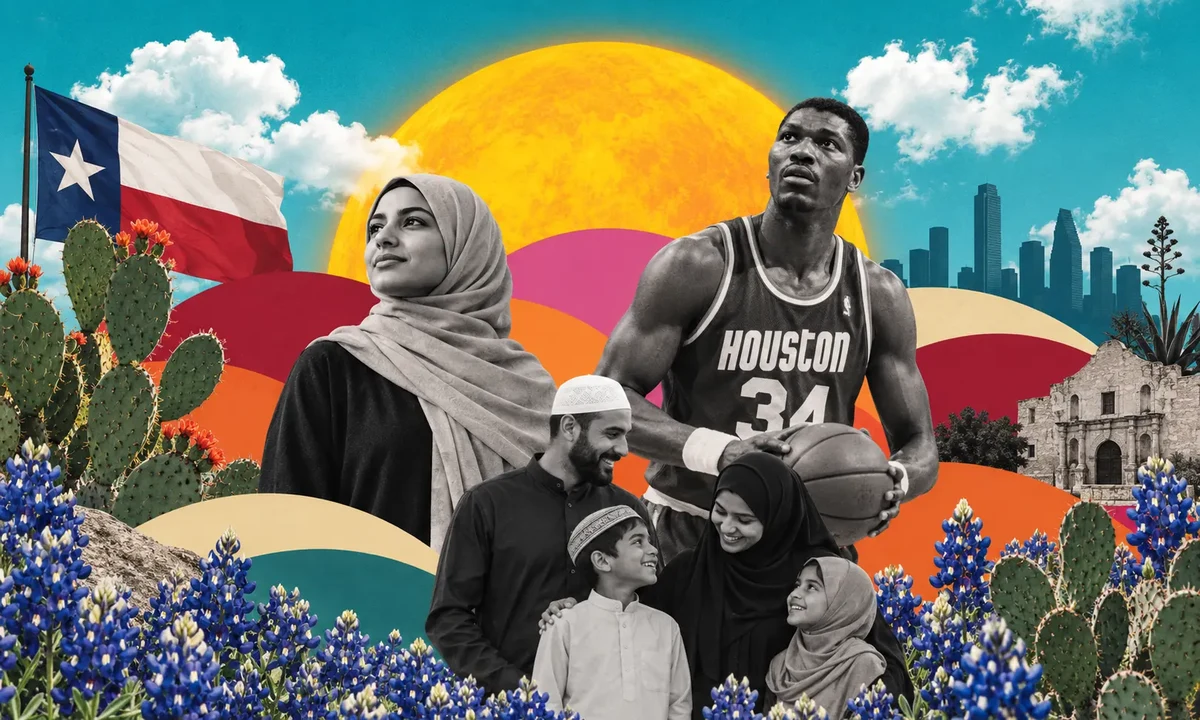
About the name: “Texas Muslim” feels more accurate than “Texan Muslim.” “Texan” turns Texas into an adjective—a qualifier attached to Muslim. “Texas Muslim” does the opposite: it places Muslims squarely within Texas itself. The emphasis is not on some modified category of Muslim, but on Muslims as part of the social, cultural, and civic fabric of Texas. It gives both words their full weight. That framework rings every bell for me.
I was born in Beirut but immigrated to the United States before I could speak. I’ll spare you the boilerplate about being “caught between two worlds.” I never experienced being Muslim and being Texan as two competing realities. They were simply parts of the same life, seamlessly intertwined—particularly in Houston.
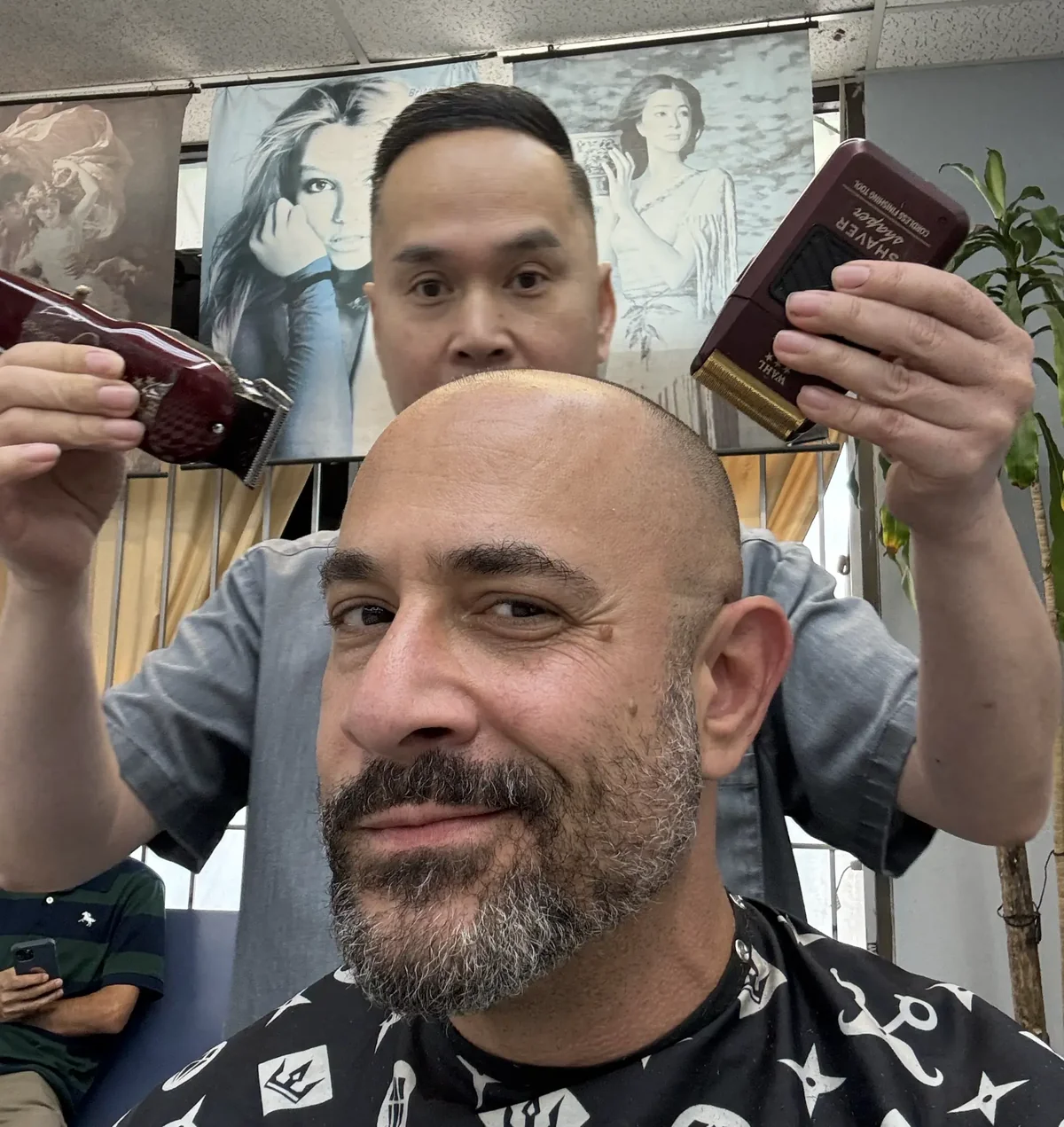
Every week, I go to the halal market near Hillcroft and Richmond, usually not long after getting a haircut from my Vietnamese barber, Danny Truong, whom I’ve been seeing for thirty years a block away. At the butcher counter, I greet the entirely Latino, entirely Catholic staff with a “¿Qué tal?” and, with almost perfect comic synchronicity, they’ll answer, “Alhamdulillah, amigo.” Then they ask whether I want fajita or picanha today.
None of this strikes me as contradictory. None of it requires explanation. These things are not separate strands being awkwardly woven together. They are already joined. They have been joined for a long time.
That is, in many ways, the message we hope to deliver here: being Muslim and being Texan are not opposing identities. There is no contradiction to reconcile. They coexist naturally, and in places like Houston they produce something richer than either identity could describe on its own. It has taken me years to fully appreciate that. I am guilty of my own garbage and I am blessed to have had Allah humble me more times than I can count.
At the same time, there are increasingly loud voices trying to define Texas through an imaginary historical snapshot: an endless prairie populated exclusively by Anglo cowboys, frozen sometime around 1836, culturally uniform and permanently Protestant. It is a Texas that never actually existed.
Texas has always been more complicated than that. Indigenous nations were here long before there was a Texas. Spanish and Mexican communities shaped the land, its language, its law and its culture. Tejanos fought, farmed, traded and built communities here. Mexican vaqueros created much of the cowboy tradition later absorbed into American mythology. Black Texans, including generations of Black cowboys, ranchers and freedmen, were fundamental to the state’s development. Enslaved Africans came here too, including people whose own histories reached back into Muslim societies in West Africa. German, Czech and Polish immigrants established towns across the state. Lebanese, Syrian, Vietnamese, Chinese, Indian, Pakistani, Nigerian, Salvadoran and countless other communities followed, each becoming part of what Texas actually is.
The history of Texas is not a story of purity. It is a story of collision, migration, adaptation and reinvention. So when someone tries to tell us that Muslims somehow exist outside the boundaries of authentic Texas identity, the answer should not be defensive. We do not need to petition for admission into someone else’s definition of Texas. We are already here. We have been here. Our families, businesses, mosques, restaurants, schools, neighborhoods, friendships and memories are already part of the place.
The task is not to prove that Muslims can become Texans. It is to remind people that Texas has always been bigger than the narrow version of it they were taught to imagine.
We intend to dispel the myths, defang the rumors and surrender absolutely no ground over who gets to belong here. Because no one owns the definition of a Texan.
BTW:
I’m not a scholar, and this is not a state office, an institution, or a nonprofit. I’m just a Houstonian who happens to be Muslim—and, depending on the day, maybe not even a particularly good one. But I know hysteria when I see it, I know stupidity when I hear it, and I still have a pretty reliable nose for old-fashioned bullshit.
Let’s talk again soon.
- Omar Afra
Method and scope
Author-supplied manuscript. This first-person founder’s note is original commentary by Omar Afra, not independent reporting or corroboration.
- Geographic scope
- Houston and Texas, United States
- Temporal scope
- First-preview integration, 2026-09-21
Sources
- 1Omar Afra — founder and editor, Texas Muslim — Texas Muslim