Evidence explainer
Must a Muslim witness swear on a Bible in a Texas court?
The law provides for an oath or affirmation. Religious identity is not a witness disqualification.
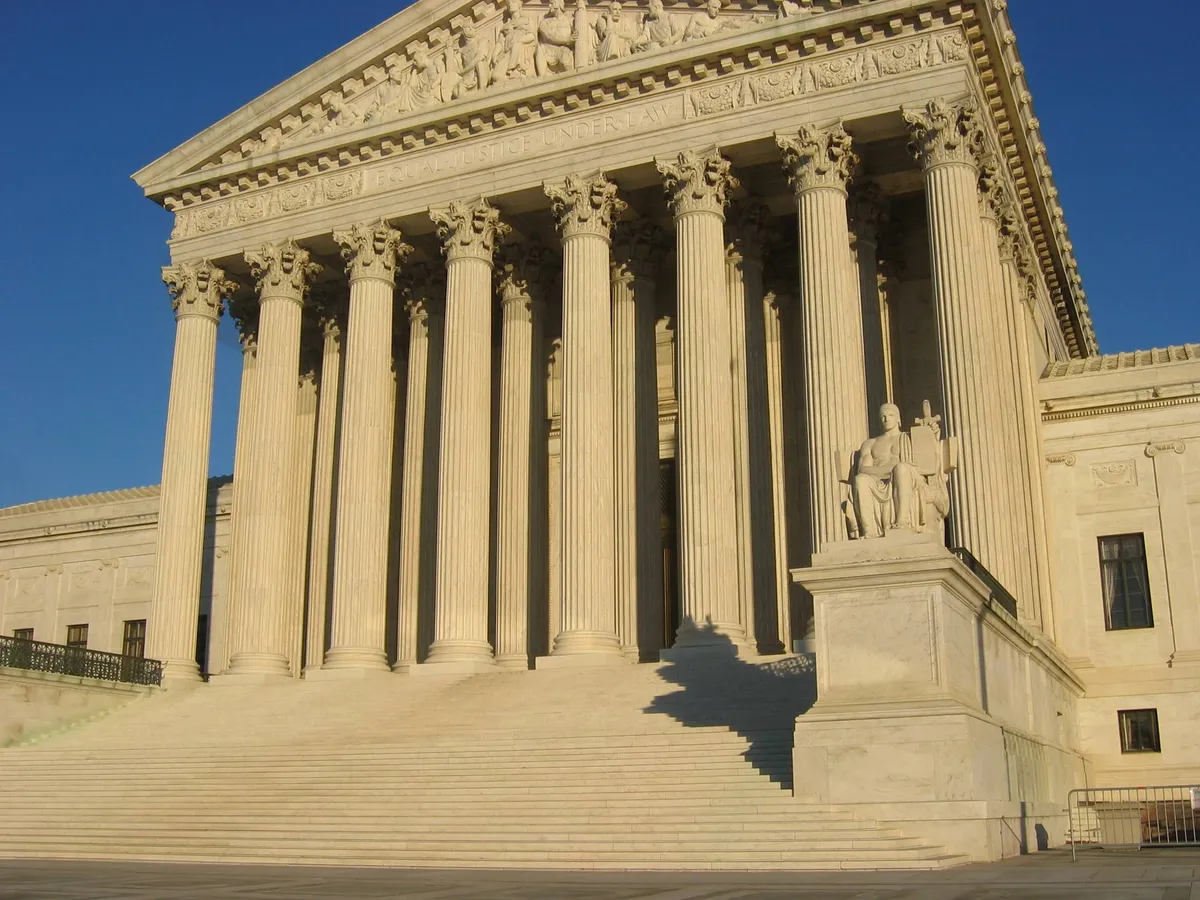

Source page · License · resized
The question
Can a Muslim testify truthfully in court without a Bible oath?
What the evidence shows
Oath or affirmation, not a test of faith
No Bible oath is required. The law provides for an oath or affirmation; religious identity is not a witness disqualification.
Sources checked
Evidence assessment
Unsupported
Applies to That a Muslim cannot testify truthfully in court without a Bible oath.
The cited evidence does not substantiate the specific assertion.
- Family
- Public law and civic rights
- Scope and date
- Texas constitutional text and the federal evidence rule.
- Also asked as
- Can I swear on the Quran in court?
- Do I have to swear on a Bible to testify?
Editorial search phrases, not documented quotations.
What this does not establish
- Does not predict how a judge administers an oath.
- Does not guarantee admissibility or credibility.
- The federal rule does not govern every Texas proceeding.
Source support
Source 1 · State constitution
Texas Constitution (official PDF) — Texas Legislative Council
Locator Art. I, § 5 (printed p. 1; PDF p. 8)
Supports No religious disqualification; oath or affirmation binding on conscience.
Cannot establish Procedure in a particular court.
Source 2 · Federal rule
Federal Rule of Evidence 603 — Oath or Affirmation to Testify Truthfully — Legal Information Institute
Locator FRE 603
Supports Oath or affirmation to testify truthfully.
Cannot establish That it governs Texas state courts.
Editorial inference
The law asks for a binding commitment to truth, which a Muslim can make by oath or affirmation. (Our reasoning from the sources, not source text.)
Source checked ; human review pending
A court requires a commitment to truthful testimony, not conversion or acceptance of a particular scripture. Texas Constitution Article I, Section 5 says a witness is not disqualified because of religious opinion or the absence of religious belief. It permits oaths or affirmations in a form binding on the witness's conscience and preserves the consequences of perjury. [1]
Federal Rule of Evidence 603 likewise requires an oath or affirmation designed to impress on the witness the duty to testify truthfully. These provisions separate the seriousness of testimony from a ritual object: neither makes a Bible the prerequisite to truthful evidence. The federal rule does not govern every Texas state proceeding. [2]
This record does not decide how a particular judge will administer an oath, or guarantee the admissibility or credibility of testimony; competency, privilege and evidentiary rules remain relevant. It does not treat a sincerely chosen religious oath as improper. Ask the court about an appropriate oath or affirmation.
How we checked this
Prepared from the linked sources, distinguishing the source statement, question and editorial finding. Source checking does not signify outside legal or scholarly review; this record is not individual legal advice.
- Place covered
- Texas constitutional text and the federal rule
- Period covered
- Current printed Texas Constitution and Federal Rule of Evidence 603
Sources
- 1Texas Constitution (official PDF) — Texas Legislative Council · retrieved 2026-10-05
- 2Federal Rule of Evidence 603 — Oath or Affirmation to Testify Truthfully — Legal Information Institute · retrieved 2026-10-05