Analysis
Why Houston Became One of America's Most Important Muslim Cities
Scale, diversity, a large mosque network, Spanish-language Islamic education, public Ramadan gatherings and the first Ismaili Center in the United States.
By Omar Afra ·
Houston · ISGH · Ismaili · IslamInSpanish
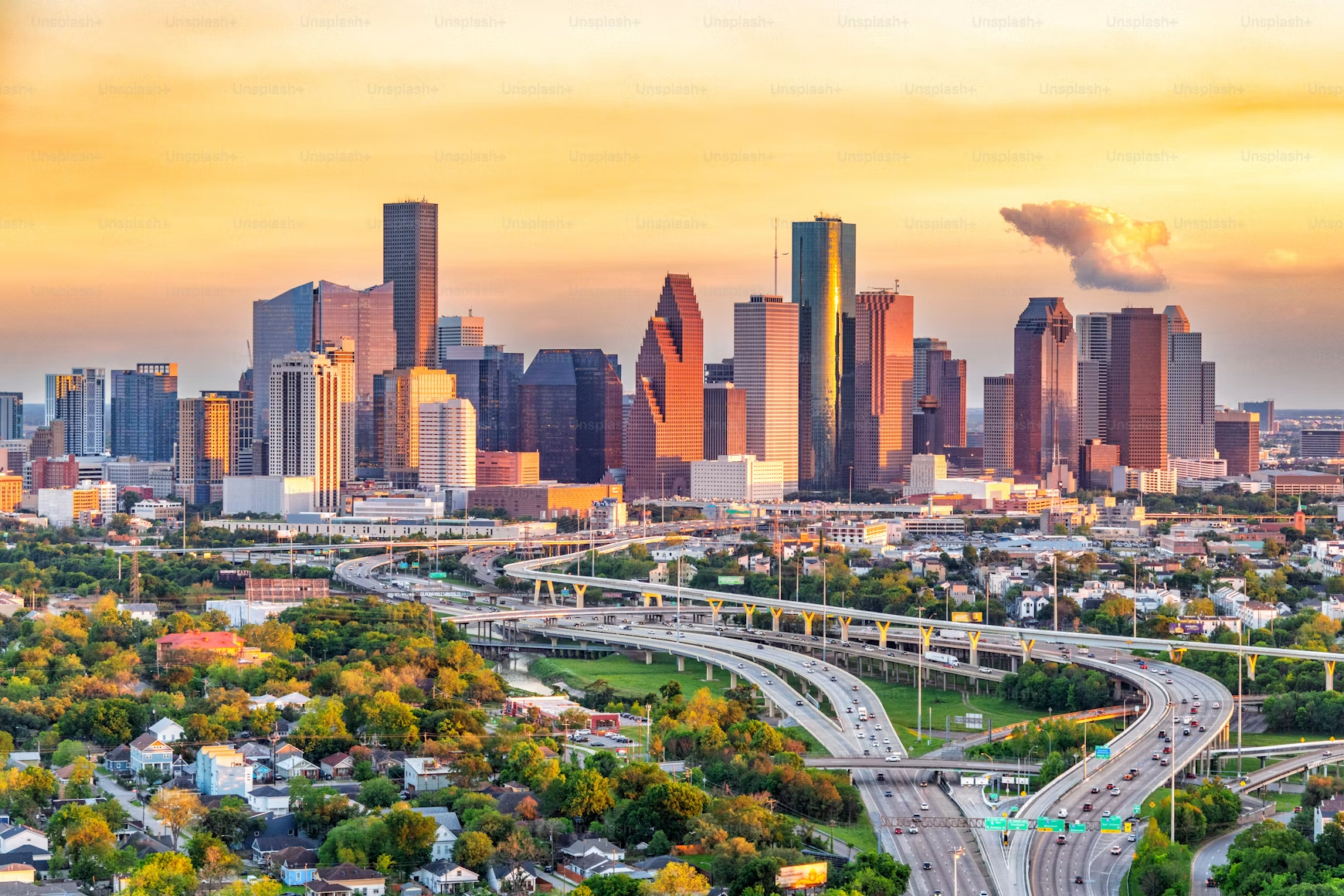
Houston does not have one Muslim community. It has many, and that is exactly why it matters. A city this large and this diverse produces Muslim institutions that range from one of the country's biggest mosque networks to storefront prayer rooms, from Spanish-language Islamic education to a major Shia Ismaili cultural landmark. Few American cities hold all of those at once.
Scale and a network of mosques
The backbone is institutional. The Islamic Society of Greater Houston, a nonprofit, oversees nearly two dozen mosques across the region, and Chron describes its Maryam Islamic Center in Sugar Land as the largest mosque in the metro [1]. A network of that size means Muslim Houstonians can often find a congregation near where they live and work, and it gives the community an organized public face for everything from funerals to holiday prayers. Alongside it, smaller volunteer-led centers such as the one in Rosenberg show a second generation shaping its own spaces [1].
A diversity built by the city's economy
Houston's energy, medical and university economies pulled in professionals and students from around the world, and refugee resettlement brought others. A 2004 University of Houston teachers' curriculum unit captured what that looked like in a single public school: Muslim students from more than twenty countries, from Pakistan and Iraq to Senegal, Bosnia and Indonesia, in a building where most families were immigrants [2]. That kind of everyday mixing is one reason Houston's Muslim institutions tend to be multiethnic, and why they often grew as neighborhood institutions rather than enclaves.
Islam in Spanish
Houston is also a center of Latino Muslim life. IslamInSpanish was founded in the city after 2001 to teach about Islam in Spanish, and it says it opened the first Spanish-speaking Islamic center in the country in 2016 [3]. In November 2024 it opened a $4 million Centro Islámico in Alief, where its founder, Jaime "Mujahid" Fletcher, had once led a gang before converting [4]. That a Spanish-language Islamic center rose in southwest Houston says something about the city itself: Latino Houston and Muslim Houston overlap.
Ramadan in public
Muslim Houston is increasingly visible in civic space. In March 2025 thousands of people gathered for a community iftar at Sugar Land Town Square, in front of city hall, which the Houston Chronicle described as historic [5]. A year later NPR and Houston Public Media reported from a Ramadan iftar at the Maryam Islamic Center where hundreds broke their fast under American and Texas flags [8]. We look at that public side of the month in Ramadan in Texas.
The Ismaili Center
In November 2025 the Ismaili Center, Houston was dedicated on Allen Parkway beside Buffalo Bayou, the first Ismaili center in the United States and the seventh worldwide, after nearly two decades of planning [6]. The 150,000-square-foot building is meant to serve as a prayer space for Ismaili Muslims and as a cultural venue for exhibitions, lectures and music, a peer, its representatives hope, to the Menil Collection and the Rothko Chapel [6]. The Guardian put Houston's Ismaili community at about 40,000, one of the largest in the country [7].
Choosing Houston for that building was a statement about the city's place in American Muslim life. So is the rest of this picture. Houston matters because it is where Sunni and Shia, Arabic and Urdu and Spanish, flagship mosques and small centers all share the same freeways. Explore the region in Muslim Houston and the directory.
Sources
- [1] Young Muslims throughout Houston are opting for 'mom and pop' mosque alternatives. Chron (Eric Killelea), 2025-04-23.
- [2] Integrating the Muslim Student into the American Classroom. Georgia Redonet, Houston Teachers Institute, University of Houston, 2004.
- [3] Local programs. IslamInSpanish.
- [4] 'There are no options like this': IslaminSpanish center opens doors in Alief to growing community of Latino Muslims. Houston Chronicle (Tanya Babbar), 2024-11-16.
- [5] Thousands of Houston-area Muslims gather for historic iftar at Sugar Land Town Square. Houston Chronicle (Jhair Romero), 2025-03-24.
- [6] Houston's stunning new Ismaili Center, the first of its kind in the U.S., is finally open. Houston Chronicle (Haajrah Gilani), 2025-11-06.
- [7] A tapestry of stone: the first Ismaili Centre in the US rises in the heart of Texas. The Guardian, 2025-11-20.
- [8] Young Texas Muslims under political pressure find solace in Ramadan and community. NPR / Houston Public Media (Natalie Weber), 2026-03-10.