Analysis
How Islam Took Root in Texas
Islam in Texas is not one immigrant story. It is a layered history of African diaspora, migration, universities, suburban congregations, Latino Muslim organizing and civic life.
By Omar Afra ·
History · Migration · Houston · Latino Muslims
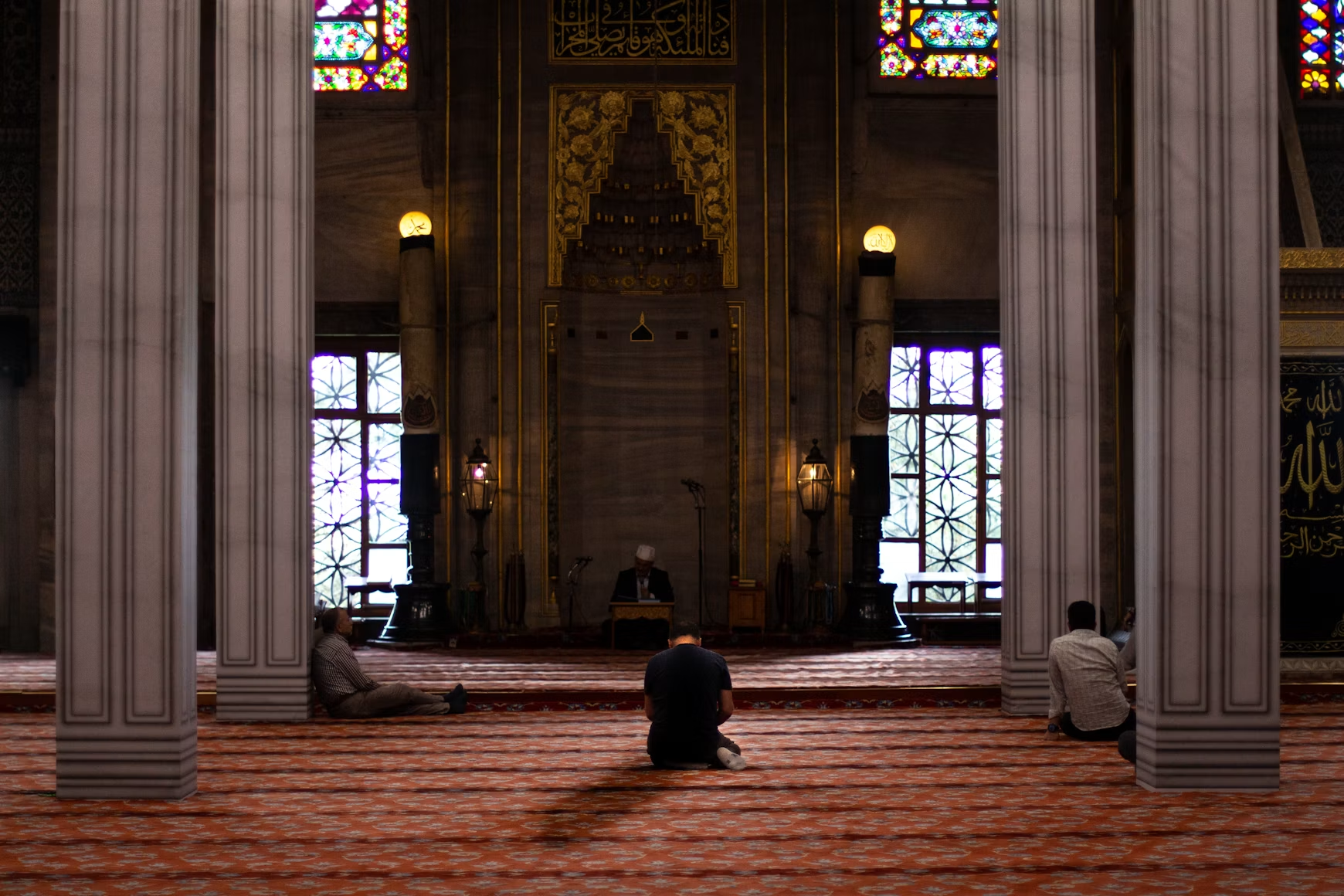
The easiest way to tell the story of Islam in Texas is as a recent arrival: a wave of immigrants after 1965, a few mosques in Houston and Dallas, and then a sudden public presence after 2001. That version is not wrong about the scale of recent growth, but it leaves out most of what makes the Texas story distinctive. Islam in Texas is better understood as layers laid down over centuries, each one shaped by who came, why they came and what institutions they built once they stayed.
The earliest layer
The first documented person of Muslim background to cross what is now Texas was Estevanico, the Moroccan-born enslaved man who survived the Narváez expedition's wreck on the Gulf Coast in 1528 [1]. His origins are documented; his religious life is not. He was baptized, and whether he kept any Islamic practice is uncertain, which is why our Estevanico evidence check treats him as the beginning of a Muslim-connected history rather than as proof of a Texas Muslim community.
He belongs to a much larger American pattern. Akbar Ahmed's Brookings study of American Muslims notes that scholars estimate 15 to 30 percent of enslaved African men and about 15 percent of enslaved African women brought to the Americas were Muslim, figures Ahmed presents as estimates that some Muslims believe are too low [2]. Texas was part of the slave economy, so this history is part of Texas history too, even though the specific religious lives of enslaved Muslims in Texas are largely unrecorded. We take that gap up directly in The Long History of Black Muslims in Texas.
Migration, universities and the modern community
The modern community took shape in the twentieth century through immigration, study and conversion [1]. Texas universities and the energy and medical economies drew students and professionals from South Asia, the Arab world, Iran, Africa and elsewhere, and many stayed. A 2004 curriculum unit written by a Houston middle-school teacher for the University of Houston's Houston Teachers Institute gives a snapshot of the result at street level: Muslim students on one campus had come from Iran, Iraq, Pakistan, Yemen, Mauritania, the Democratic Republic of the Congo, India, Egypt, Senegal, Afghanistan, Indonesia, Bosnia, Somalia, Nigeria and more, some as immigrants and some as refugees [3].
That teacher also noted what makes Houston unusual: in a school where most students came from immigrant families, Muslim newcomers were one immigrant group among many rather than a single visible minority [3]. That context matters for understanding why Muslim institutions in Texas cities grew as ordinary neighborhood institutions, with schools, clinics and food pantries alongside prayer halls.
Latino Muslim organizing
A newer layer is Spanish-speaking. IslamInSpanish, founded in Houston after September 11, 2001, set out to teach Latino Houstonians about Islam in their own language; it says it opened the first Spanish-speaking Islamic center in the United States in 2016 and estimates that about 1,000 Latinos have embraced Islam through its Houston work [4]. In November 2024 the group cut the ribbon on a $4 million Centro Islámico in Alief, under the neighborhood's water tower, and a Houston City Council member at the event described it as a place only southwest Houston could have produced [5]. Those are the organization's own estimates and one reporter's account, not a census, but they show a Texas Muslim life that is not only immigrant and not only English-speaking.
Institutions and civic life
By the 2020s, the institutional picture ranged from a nearly two-dozen-mosque network run by the Islamic Society of Greater Houston to small volunteer-led centers in suburbs like Rosenberg [8], and to the Ismaili Center, Houston, opened in November 2025 as the first such center in the United States [6]. How many Muslims live in Texas is still an estimate: the Texas State Historical Association reports 421,972 for 2010 [1], and a 2025 House concurrent resolution, introduced but not a census, cites about 500,000 Muslims and more than 330 mosques and centers [7]. Our almanac explains what each number measures.
Put together, these layers explain why no single origin story fits. Texas Islam is African diasporic history, graduate-school migration, refugee resettlement, suburban congregations and Latino conversion, all happening in the same state. For the full chronology, start with our history of Muslims in Texas and the Islam in Texas guide.
Sources
- [1] Muslims. Handbook of Texas, Texas State Historical Association.
- [2] Journey into America (chapter one). Akbar Ahmed, Brookings Institution Press.
- [3] Integrating the Muslim Student into the American Classroom. Georgia Redonet, Houston Teachers Institute, University of Houston, 2004.
- [4] Local programs. IslamInSpanish.
- [5] 'There are no options like this': IslaminSpanish center opens doors in Alief to growing community of Latino Muslims. Houston Chronicle (Tanya Babbar), 2024-11-16.
- [6] Houston's stunning new Ismaili Center, the first of its kind in the U.S., is finally open. Houston Chronicle (Haajrah Gilani), 2025-11-06.
- [7] HCR 18, introduced text, 89th Legislature. Texas Legislature, 2025.
- [8] Young Muslims throughout Houston are opting for 'mom and pop' mosque alternatives. Chron (Eric Killelea), 2025-04-23.