Glossary
Shahada
The Islamic testimony of faith affirming God’s unity and Muhammad (PBUH) as God’s messenger. Reading or translating it is not the same as adopting it.
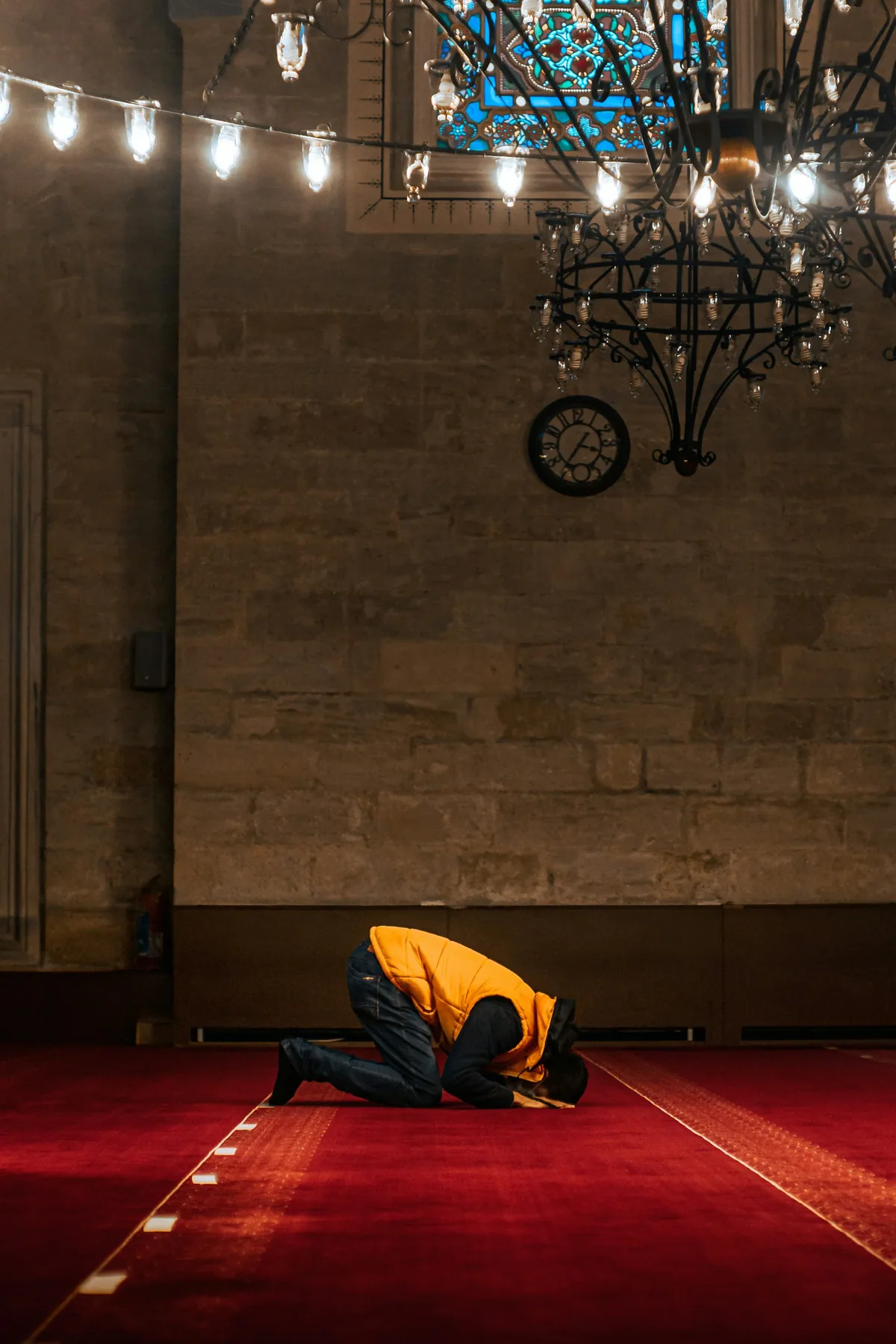
The shahada is Islam’s testimony of faith. It affirms that there is no deity but God and that Muhammad (PBUH) is God’s messenger. In Muslim religious life it expresses foundational belief. A publication can explain the wording without asking readers to profess it or implying that understanding a religious statement amounts to conversion.[1]
Testimony and intention
A sincere profession and a quotation are different acts. A student reading the words in a history lesson, an interpreter translating a sign and someone declaring religious belief are not doing the same thing. Treating any exposure to the sentence as forced religious participation confuses information with assent.
That distinction does not excuse coercion. The actual setting matters: was a person being asked to learn about a belief, to recite a devotional statement as their own, or to participate in worship? Those are specific questions about an activity, not answers that can be extracted from the presence of Arabic text alone.
What the declaration says about worship
The testimony distinguishes God from the messenger. Muhammad (PBUH) is not worshipped as divine. Qur’an 112’s statement of divine unity provides a compact scriptural expression of this theology. Muslims’ reverence for the messenger and their worship of God should not be collapsed into the same act.[2]
The declaration is also not an ethnic membership test. Its religious significance does not depend on Arab ancestry or one national language spoken at home. Learning an Arabic formula can connect worshippers across languages without erasing their different cultures and citizenships.
An inscription needs context
The shahada can appear in devotional calligraphy and other religious settings. It has also been used in political symbols. The same wording does not make every object bearing it part of the same organization. An allegation about a flag or emblem needs attention to the complete design, provenance and actual use.
A mosque’s calligraphic inscription and a militant group’s branding cannot be treated as equivalent merely because both contain a religious declaration. The appropriate response is not to deny that organizations use religious language. It is to avoid granting one organization exclusive ownership of a statement used throughout a much larger tradition.
Learning without suspicion
For a Texas reader, translating a visible text is usually the first step. Identify the phrase, explain its role, and then examine any separate claim about the institution displaying it. If a specific political message accompanies the declaration, report that message directly. If it does not, do not invent one.
A person discussing conversion should also be allowed an individual account. A testimony may be a significant moment, but it does not instantly explain every subsequent opinion, relationship or practice. Religious identities develop within lives, not outside them.
The shahada belongs first to belief and witness. Explaining it accurately makes Islam easier to understand while preserving the reader’s freedom to agree, disagree or simply learn. That is a different project from either devotional instruction imposed on unwilling people or fear generated by leaving familiar religious ideas untranslated.