Opinion / Commentary
The Islamophobia Industry Is Selling Texas an Un-American Lie
Documented funding networks, political campaigns, and fabricated grassroots outrage reveal an organized assault on Muslim belonging. Texans who value liberty should recognize what is being sold to them.
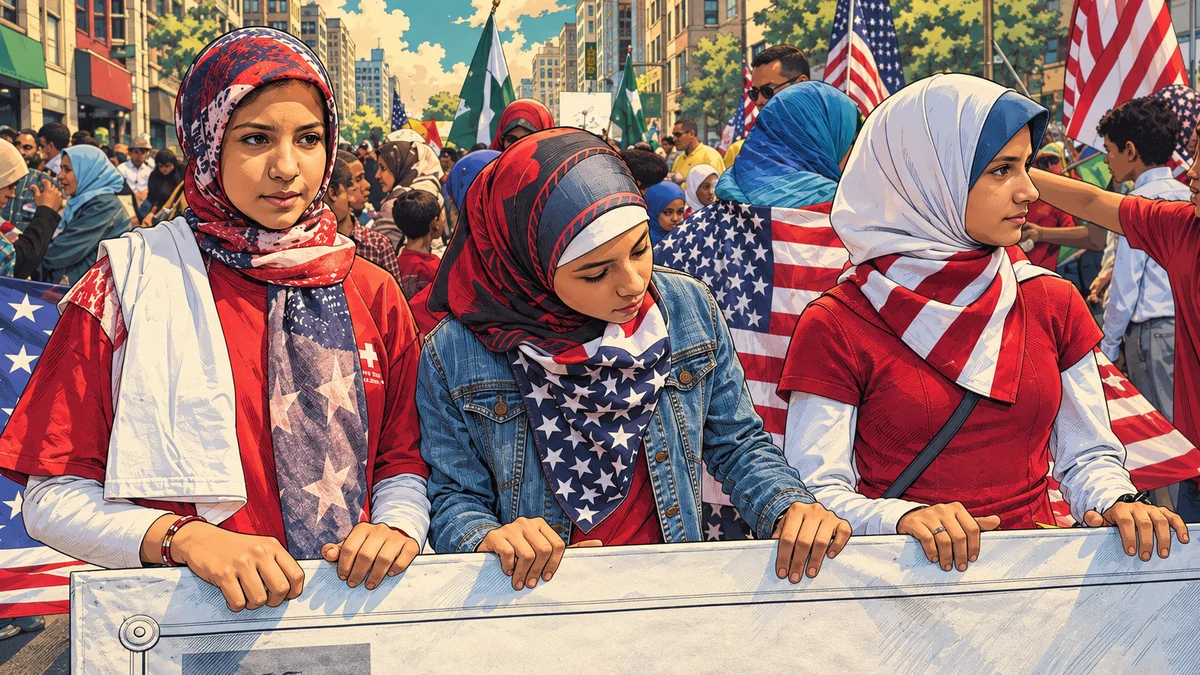
A Muslim wins an election, and an ordinary act of American democracy becomes evidence of a foreign takeover. A Muslim community proposes a neighborhood, and the language of invasion replaces the language of property rights. A Muslim demands accountability for atrocities abroad, and suddenly the argument concerns whether that American belongs here. This conversion of citizenship into suspicion is the central product of the Islamophobia industry. Texans are being asked to purchase it under the label of patriotism.
The Center for the Study of Organized Hate’s August 12 report deserves credit for making that process measurable. CSOH found that posts it classified as Islamophobic and directed at Abdul El-Sayed rose from an average of 155 daily before Michigan’s Democratic Senate primary to 3,099 daily during August 4–10, roughly a twentyfold increase. That week accounted for 21,690 posts, more than half the total it recorded targeting him since January 1. Its analysis covered six platforms and identified recurring allegations of terrorism, religious takeover, and disloyalty.
These are counts of posts within CSOH’s collection, not a census of perpetrators or proof that each account received instructions. The brief also offers limited detail about collection and classification. Its contribution remains substantial: it documents how an electoral breakthrough coincided with a concentrated campaign against a candidate’s religious identity. CSOH deserves recognition for investigating that pattern with evidence instead of treating each eruption as an unrelated controversy.
The broader record supports a thesis more useful than imagining a single command center: anti-Muslim hostility has a professional infrastructure. Donors sustain organizations; organizations produce arguments, litigation, and campaigns; political figures supply authority and reach. Individuals can sincerely repeat a prejudice that organized interests have cultivated. Establishing that infrastructure does not require pretending that every ugly opinion was purchased. It requires following documented money and activity, and separating those findings from claims the evidence cannot support.
The Center for American Progress’s 2011 investigation, Fear, Inc., was an important early effort to do exactly that. The progressive policy organization traced $42.6 million from seven charitable groups during 2001–2009 to organizations it identified as part of an Islamophobia network. Its subjects included Daniel Pipes and the Middle East Forum, Frank Gaffney and the Center for Security Policy, Robert Spencer, Steven Emerson, and David Yerushalmi. CAP described relationships among funders, commentators, activists, media outlets, and political figures. Those historical figures should be read as dated findings, rather than a current budget for the entire movement.
Pipes disputed CAP’s characterization and several financial details. His own published response, however, confirmed that Donors Capital Fund had given the Middle East Forum $2.6 million during 2001–2009, correcting CAP’s lower figure of $2.3 million. Pipes described his work as warning against lawful Islamism. That distinction belongs in an honest account: opposition to a political ideology and hostility toward Muslims are different claims. His response nevertheless confirms a significant funding relationship in the very network under examination.
The Middle East Forum’s current account of its mission supplies further evidence of organized political activity. Founded by Pipes, it describes drafting model legislation, building legislative coalitions, and coordinating grassroots mobilization. Its stated objectives include combating lawful Islamism domestically and advancing Palestinian acceptance of Israel abroad. These activities and priorities appear together in its own description. Their institutional overlap is documented; a claim that every participant shares a concealed motive would require additional evidence.
There are also instances of direct organizing. In a 2019 press release, the Forum said it funded Tommy Robinson’s legal defense and financed, organized, and staffed three London rallies supporting him in 2018. It defended that assistance as a response to unfair treatment by British authorities. Whatever one makes of that defense, money, staffing, and rallies are demonstrable organizational activity. They provide a firmer basis for discussing coordination than the assumption that similar opinions must have a common author.
The Council on American-Islamic Relations’ 2022 report, Islamophobia in the Mainstream, extended the financial inquiry. The Muslim civil-rights organization reported $105,865,763 in grants from 35 reviewed charitable institutions and foundations to 26 organizations it classified as members of an Islamophobia network during 2017–2019. Its methodology identifies publicly available tax filings as the financial source. This is funding received by those organizations, some of which conduct work across multiple issues; it is not an audited finding that every dollar purchased anti-Muslim messaging. That precision strengthens the case for scrutiny by keeping the accusation within the evidence.
Some operations go further than public advocacy and manufacture the appearance of ordinary citizens speaking. In March 2024, Ali Chenrose at the Atlantic Council’s Digital Forensic Research Lab documented a network amplifying anti-Muslim material from an account presenting itself as a Canadian nonprofit. Researchers found artificial profile images, repetitive comments, and misleadingly altered material. One photograph of a British demonstration had been edited to make a banner demanding Sharia for the UK appear to demand it for Canada. The purported local threat was being assembled out of a doctored image.
Meta’s first-quarter 2024 threat report, on pages 10–11, linked the broader operation to STOIC, an Israeli political marketing firm. It described content combining praise for Israeli military actions with criticism of Muslims, and reported removing hundreds of accounts. OpenAI’s investigation independently identified STOIC as the operator and documented fabricated personas and purported activist websites. Both companies reported limited authentic engagement. These findings establish a specific deceptive operation; they do not establish that STOIC directed the El-Sayed surge, worked with the Middle East Forum, or caused every episode of anti-Muslim hostility.
The political usefulness of redirecting attention toward Islam deserves examination on its own terms. Attacking Islam is easier than defending Israeli war crimes. A discussion about responsibility for starving civilians can be diverted into an argument over whether the Muslim demanding accountability is dangerous. The people facing questions about military conduct gain a different subject; the critic acquires a loyalty test. That is an argument about what the rhetoric accomplishes, not a claim that every person repeating it was handed the same instructions.
The underlying conduct cannot honestly be dismissed as an invention of Muslim activists. In findings presented to the United Nations Human Rights Council in June 2024, an independent commission concluded that Israeli authorities were responsible for war crimes and crimes against humanity, including starvation as a method of warfare and intentional attacks on civilians. It separately found Hamas and other Palestinian armed groups responsible for war crimes, including killing civilians and taking hostages. These are investigative findings, distinct from criminal convictions. They give the debate a body of evidence that attacking a critic’s religion cannot answer.
The proper object of accountability is conduct, whether committed by a state, an armed group, an advocacy organization, or an individual. Jewish Americans bear no collective responsibility for Israel’s government, just as Muslim Americans bear none for Hamas. Support for Israel does not by itself establish anti-Muslim prejudice. What deserves scrutiny is the documented use of religious fear to discredit fellow citizens and evade arguments about policy. A Muslim’s equal citizenship cannot become collateral damage in the defense of a foreign government.
Texas has a prominent place in this record. In its April 2026 report, Manufacturing the Muslim Threat, CSOH identified 1,111 posts from 46 Republican elected officials between February 2025 and March 2026. Eight Texas officials produced 442, or 40 percent of the dataset. It also identified 89 officials participating through at least one of three avenues: social media, legislation, or caucus membership. Its account traces the campaign’s early escalation to Governor Greg Abbott’s amplification of claims about the proposed EPIC City development near Dallas. The report merits close reading for connecting online rhetoric to institutional activity.
A proposed development can properly face scrutiny over financing, zoning, discrimination, or compliance with law. Investigators should establish violations through evidence and apply the same standards to comparable projects. Casting Muslim settlement itself as a civilizational emergency moves the argument onto different ground. It makes neighbors appear to be an occupying force and allows the mere exercise of ordinary freedoms to become suspicious. Texans who would fiercely defend their own church, property, and political association should recognize how readily that reasoning could be turned against them.
Religious conscience belongs to Texas’s founding vocabulary. The 1836 Declaration of Independence protested the denial of worship according to conscience under an established national religion. Texas’s founding generation also sanctioned slavery and racial exclusion, as the state’s own historical account makes clear. An honest appeal to Texas liberty must acknowledge both facts. The legacy worth defending is the promise of freedom and the obligation to extend it equally, rather than the claim that our predecessors always honored it.
The Texas Constitution makes the present obligation explicit. Article I, Section 3a protects equality under law regardless of creed, among other characteristics. Section 6 prohibits legal preference for a religious society or mode of worship and requires the Legislature to protect equally every religious denomination in the peaceful enjoyment of public worship. Those protections are inconvenient for anyone trying to make Muslim visibility inherently suspect. A politician who would make religious liberty conditional on an approved religion is asking Texans to abandon their own constitutional commitment.
The federal commitment is equally direct. Article VI of the United States Constitution prohibits a religious test for federal public office, while the First Amendment protects religious exercise and forbids religious establishment. Treating a Muslim’s faith as automatic disqualification from office repudiates the civic principle those provisions express. People remain free to criticize theology, challenge a candidate’s program, and oppose coercive religious politics. Equal citizenship requires judging actual positions and behavior instead of assigning disloyalty through religious identity.
This is the basis for calling religious exclusion un-American. The charge concerns an attack on a constitutional principle; it requires no fantasy that American history has been free of bigotry. Citizens can disagree deeply about religion and foreign policy while sharing the same political rights. A movement that seeks to reserve those rights for an approved religious population would replace that common citizenship with sectarian permission. A flag draped over the proposal cannot resolve the contradiction.
Texans should demand evidence when politicians invoke a Muslim threat, financial transparency when organizations market religious fear, and equal standards when government investigates religious communities. Journalists should distinguish manufactured engagement from public opinion and identify the funding and organizational relationships they can actually document. CSOH, the researchers behind Fear, Inc., CAIR, and DFRLab deserve credit for contributing different pieces of that record. Their work helps the public inspect how a frightening claim is produced, circulated, and converted into political authority.
Muslim Texans do not owe anyone a smaller public presence to make religious freedom comfortable. They are entitled to build communities, contest elections, criticize governments, and practice their faith under the same laws as their neighbors. Texas patriotism should make that entitlement secure. An industry that sells the opposite is asking Texans to surrender liberty in exchange for an enemy, and charging them for the betrayal.
Sources
- 1Center for the Study of Organized Hate’s August 12 report
- 2Center for American Progress’s 2011 investigation, Fear, Inc.
- 3own published response
- 4current account of its mission
- 52019 press release
- 6Council on American-Islamic Relations’ 2022 report, Islamophobia in the Mainstream
- 7Ali Chenrose at the Atlantic Council’s Digital Forensic Research Lab
- 8Meta’s first-quarter 2024 threat report
- 9OpenAI’s investigation
- 10findings presented to the United Nations Human Rights Council in June 2024
- 11Manufacturing the Muslim Threat
- 121836 Declaration of Independence
- 13state’s own historical account
- 14Texas Constitution
- 15Article VI of the United States Constitution
- 16First Amendment