Glossary
Dhikr
Remembrance of God, expressed through attention, recitation and other devotional practices. It is not one uniform ceremony or a substitute for accountability.
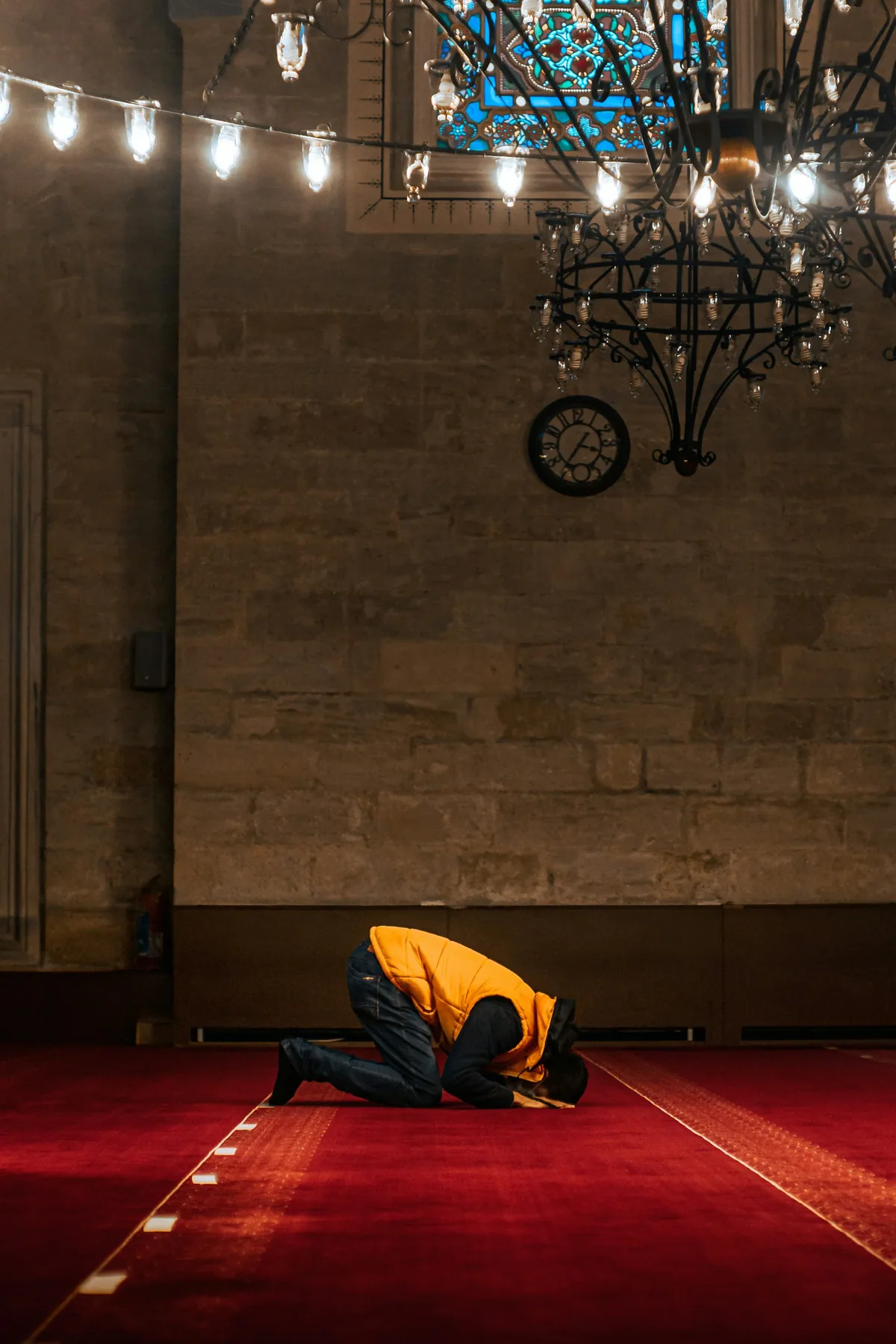
Dhikr means remembrance of God. The term can describe spoken recitation, silent attention and other devotional practices. Qur’an 33:41–42 calls for frequent remembrance, while 13:28 associates remembrance with reassurance of the heart. These are religious statements about worship and attention, not clinical guarantees about the effect of a particular exercise.[1][2]
More than repeating a sound
Repetition can be part of dhikr, including divine names and familiar formulas. But the religious intention concerns remembrance, not a claim that sound alone automatically transforms conduct. A person may practice privately or participate in a gathering. Communities differ in method, setting and interpretation.[3]
Sufi circles may organize particular forms of remembrance around a teacher or tradition. Other Muslims engage in remembrance without belonging to a Sufi order. The practice should not be assigned exclusively to one institutional identity merely because a striking ceremony is what an observer first encounters.[3]
A gathering needs its own description
A video can show people sitting, reciting or moving together. It cannot establish every participant’s belief, motivation or relationship to the host. A caption should identify the actual practice where known and avoid using unfamiliar sound or movement to imply irrationality, danger or coercion.
Where a question concerns an institution’s conduct, investigate that conduct. Religious intensity does not establish abuse, and spiritual vocabulary does not disprove it. A teacher’s responsibilities, financial representations and treatment of participants remain legitimate subjects. Respect for worship need not become exemption from ordinary accountability.
Attention and everyday life
Someone explaining dhikr may describe an effort to interrupt distraction, remember obligations or orient ordinary activity toward God. These explanations make the practice intelligible without reducing it to a productivity technique. The religious meaning matters to participants even when an outsider recognizes some familiar features of sustained attention.
A publication should also avoid promising therapeutic outcomes. Personal testimony can be reported as testimony. Claims about treating illness require a different kind of evidence and appropriate professional advice. A devotional practice can be meaningful without being advertised as a universal treatment or a reason to discontinue care.
Visiting a circle
Ask whether visitors are welcome, what participation involves and whom to approach with questions. Do not assume every event advertised as Sufi or dhikr follows the same order. A directory should distinguish an established organization, a recurring public gathering and a private invitation, using the host’s own current information.
Photographs should preserve the dignity of participants. Identifiable people should not become generic illustrations of an unrelated political allegation because they were photographed in worship. The same image can inform or mislead depending on its caption and placement.
Dhikr is best introduced as remembrance: a practice intended to direct the believer’s attention toward God. The term can then be understood within a specific person’s or community’s life. That is more useful than either romanticizing the scene as automatically transformative or treating an unfamiliar devotional method as proof of something sinister.