Publication announcement
See It. Report It. Put Texas Islamophobia on the Record.
Texas Muslim’s new tracker gives people a place to report anti-Muslim incidents, read reviewed public accounts and follow what happens next. Voting and elections are its first featured category.
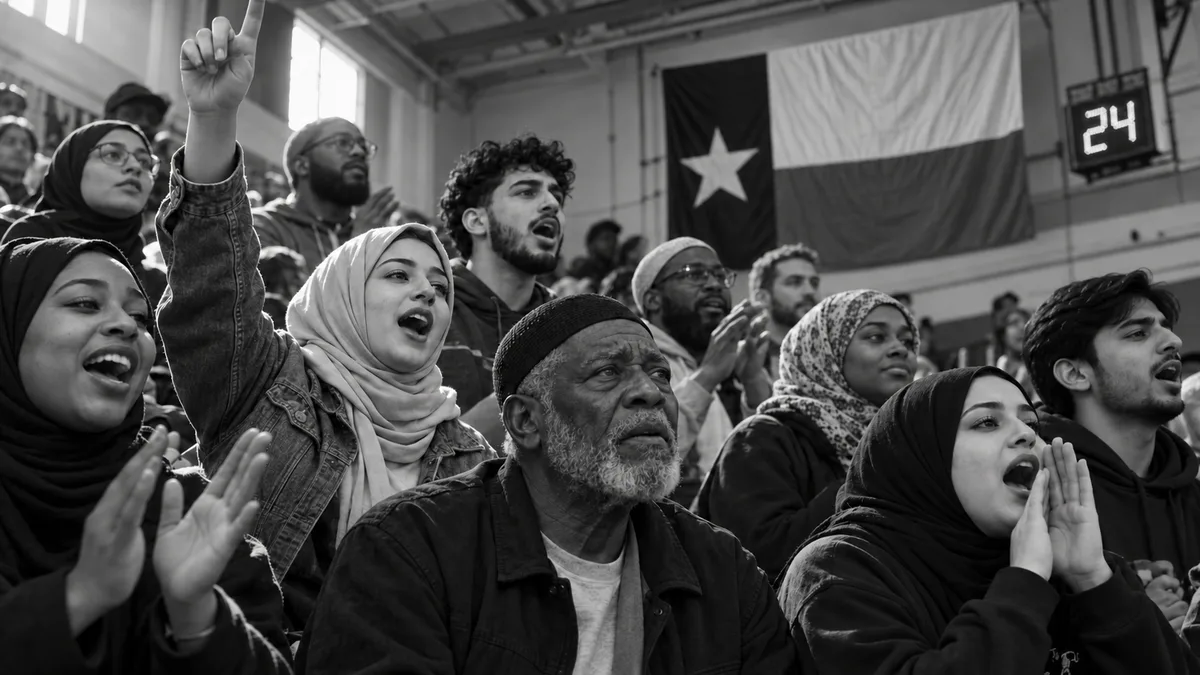
A slur in a parking lot. A threat in an inbox. A problem at a polling place that somebody shrugs off as a misunderstanding. If it happened to you, it deserves more than a disappearing post and a chorus of people explaining what you must have meant.
It deserves a record. A date. An account of what was said or done. Evidence where it exists. Space for a response. And a way to come back later and see whether anything changed.
That is why we built the Texas Islamophobia Tracker: a place to submit accounts of anti-Muslim harassment and discrimination, explore the accounts cleared for public display, and follow their subsequent updates. The tracker covers everyday life in Texas. Its first featured component, Voting & Elections, focuses on experiences connected to registering, voting, attempting to vote, working at the polls and participating in election activities.
This announcement was prepared on October 26, during Texas’s 2026 voting period. The Secretary of State’s published calendar puts early in-person voting on October 19–30 and Election Day on November 3. Our 2026 voter guide provides a separate place to examine candidates and the official election resources. The tracker asks a different question: what happened to someone trying to participate?
A voting problem needs help before it needs a headline
If you are facing a problem while trying to vote, start with assistance. Texas Muslim is a publication. Sending us an account does not summon an election lawyer, notify an election official or guarantee an immediate response.
Election Protection lists 866-687-8683 for calls or texts about voting problems and election questions. VoteTexas.gov’s voter-rights page lists 1-800-252-8683 and local election officials as routes for reporting possible voting-rights abuses. The Justice Department’s voting resources link to its civil-rights reporting form and direct emergencies involving violence or threats at polling places to 911.
Those are separate channels with separate roles. You can seek help and also choose to tell Texas Muslim what happened. We will not quietly turn your editorial submission into a complaint to another organization.
Tell us what happened. You do not have to argue the whole case.
You do not need a lawyer’s vocabulary to make a report. Describe the words, actions and circumstances as clearly as you can: when it happened, the city or county, what you directly experienced, and what you learned from someone else. If you believe anti-Muslim bias was involved, tell us what led you to that conclusion.
An incident involving a Muslim person is not automatically an anti-Muslim incident. A delay is not automatically voter intimidation. Those distinctions matter. So does making room for people whose accounts have never reached an official report or a news desk.
The voting component offers optional issue-type fields for access problems, harassment or intimidation, and other concerns, alongside settings including polling places, registration, election work, campaign events and online experiences. Broader categories cover workplaces, schools, public spaces and community institutions. Choose the closest fit. Editors can ask questions and organize the account without asking you to pronounce a legal verdict.
Do not include your ballot choices, voter identification numbers, immigration status, home address or private information about children. You should never have to trade those details for a chance to be heard.
A public account carries an evidence status
The tracker is public because people should be able to see the record, not just feed information into a box and wonder where it went. Publication still requires review and permission. Submitting an account does not automatically place it on the map or make it visible to other readers.
The evidence status tells you what you are reading. A submitted account remains an account someone has provided. Independent corroboration means supporting material has been checked beyond that account. An official finding refers to an identified institution’s actual decision, linked with its scope; it does not automatically establish a crime. None of those labels should do work the evidence cannot support.
Our Evidence Desk already distinguishes a public claim from the documents used to examine it. Our reporting on Sharia, Texas law and public allegations follows the same principle: a slogan, an investigation and a court ruling are different things. The tracker brings that discipline to individual incident accounts.
The person reporting keeps a say in publication
The reporting flow separates permission to contact you from permission to consider an anonymized public account. Contact information stays private. Public locations are limited to a city or county rather than a person’s home or immediate whereabouts.
Editors may remove identifying details, ask for clarification or decide that an account is not ready to publish. A person may have a serious experience and good reasons not to make it public. The form should accommodate that reality. Our editorial standards, methodology and corrections process remain available to readers who want to check our work.
What happened next belongs in the record too
A report is a starting point. A school may respond. An employer may answer a question. A reporter may obtain a document. Someone may correct a mistaken detail. A dispute may remain unresolved.
Open a case to see its available evidence and subsequent updates. Use Following to return to the accounts you want to keep up with. Following saves public case IDs on this device only; it does not send email notifications. Additional information goes through review rather than straight into a public argument beneath somebody’s experience. A busy comment section is not the same thing as a better record.
We will also keep the limits visible. The number of accounts on this tracker describes the material submitted and published here. It is not a census of Islamophobia, a statewide crime rate or proof that conditions are getting better or worse. An empty map would not establish that nothing happened. A crowded one would still require careful reading.
The election gives this work urgency. It does not give it an expiration date. Muslim Texans will still be going to school, going to work, visiting their mosques and dealing with public institutions after November 3.
If you have an experience to share, start a report. If you came to understand what others have reported, explore the tracker. Bring the particulars. Leave room for verification. Help make a record that lasts longer than the outrage cycle.
Sources
- 1Texas Secretary of State Reminds Voters: October 5 Deadline to Register to Vote in November General Election — Texas Secretary of State · retrieved 2026-10-26
- 2Your Rights FAQs — VoteTexas.gov / Texas Secretary of State · retrieved 2026-10-26
- 3Contact — Election Protection / Lawyers’ Committee for Civil Rights Under Law · retrieved 2026-10-26
- 4Report voting issues — U.S. Department of Justice, Civil Rights Division · retrieved 2026-10-26