Glossary
Imam
Imam means leader. It can describe a prayer leader, a community religious leader or a distinctive theological office in Shi‘i traditions.
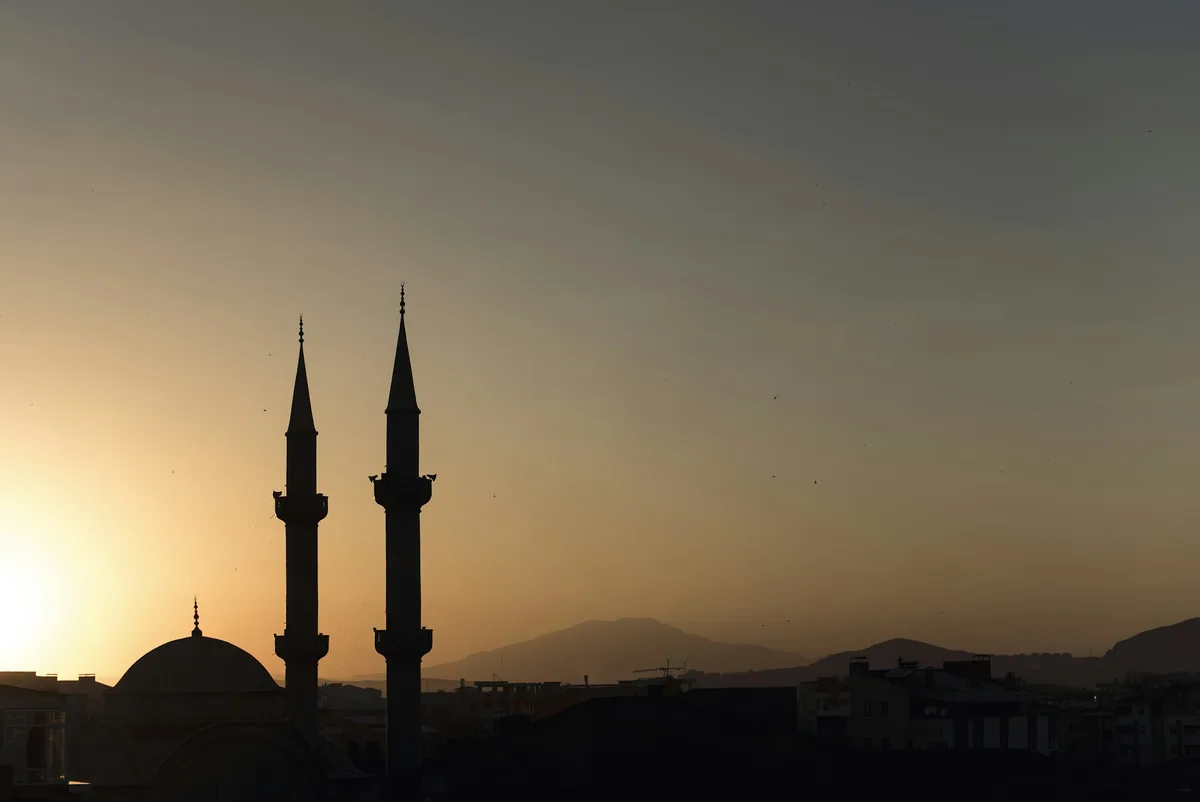
Imam means leader. In everyday mosque life, it often refers to someone who leads prayer or serves as the community’s religious leader. In Shi‘i theology, Imam can refer to a succession of authorities understood to possess a special religious role. These meanings concern leadership but are not interchangeable. A local job title should not be confused with a theological office.[1]
A role, not a universal command structure
An imam may lead worship, preach, teach or provide pastoral guidance. The responsibilities of a particular appointment depend on the institution. Governance may also involve a board, trustees or other officers. Check those arrangements rather than assume one person controls every financial, educational and administrative decision.
A prayer hall’s architecture helps make the role visible. A mihrab indicates the direction of prayer, while a minbar is associated with the sermon. Those features organize religious worship; they do not make the imam a state official. A congregation can have formal leadership without claiming civil jurisdiction over its neighborhood.[2]
The person leading a particular prayer also need not occupy a permanent salaried office. A glossary cannot infer an institution’s staffing model from the visible act of leading worship. Public records and the institution’s own explanation provide better evidence about who holds which responsibilities.
Describe authority precisely
When quoting an imam, identify the institution and the capacity in which they speak. Are they explaining that congregation’s practice, offering a personal opinion or describing a broader scholarly position? The title does not make someone representative of every Muslim in Texas. Nor does lacking the title make a Muslim resident unable to explain their own experience.
Qualifications deserve accuracy. Some leaders have extensive formal religious study; others have different educational and community backgrounds. Do not invent a degree or ordination process because it resembles another tradition. Ask about actual training and duties when relevant to the story.
Meeting a local institution
A visitor can contact the public office about tours, service times and expectations for entering the prayer area. An imam may be the right contact, but an administrator or volunteer may handle visits. Obtain the information from the institution rather than guessing about facilities, accessibility or visitor arrangements.
The Islamic Association of North Texas describes outreach opportunities on its official site. This supports a statement about that organization, not a promise that every mosque offers the same program. Distinguishing a general religious role from specific services makes a directory more useful.[3]
An imam’s statements and conduct remain open to scrutiny like those of other community leaders. Religious respect does not require deference to an unsupported assertion. Criticism of one leader also does not justify suspicion of unrelated congregants. In both directions, the person and the scope of their authority matter.
Leader is therefore a useful first translation. Follow it with the actual role, institution and context. That tells readers more than romanticizing the position as unquestionable spiritual wisdom or depicting it as command of an imagined political network.