Glossary
Sunni
Sunni identifies a major Islamic tradition containing diverse legal schools, theological approaches and communities. It is not one political position.
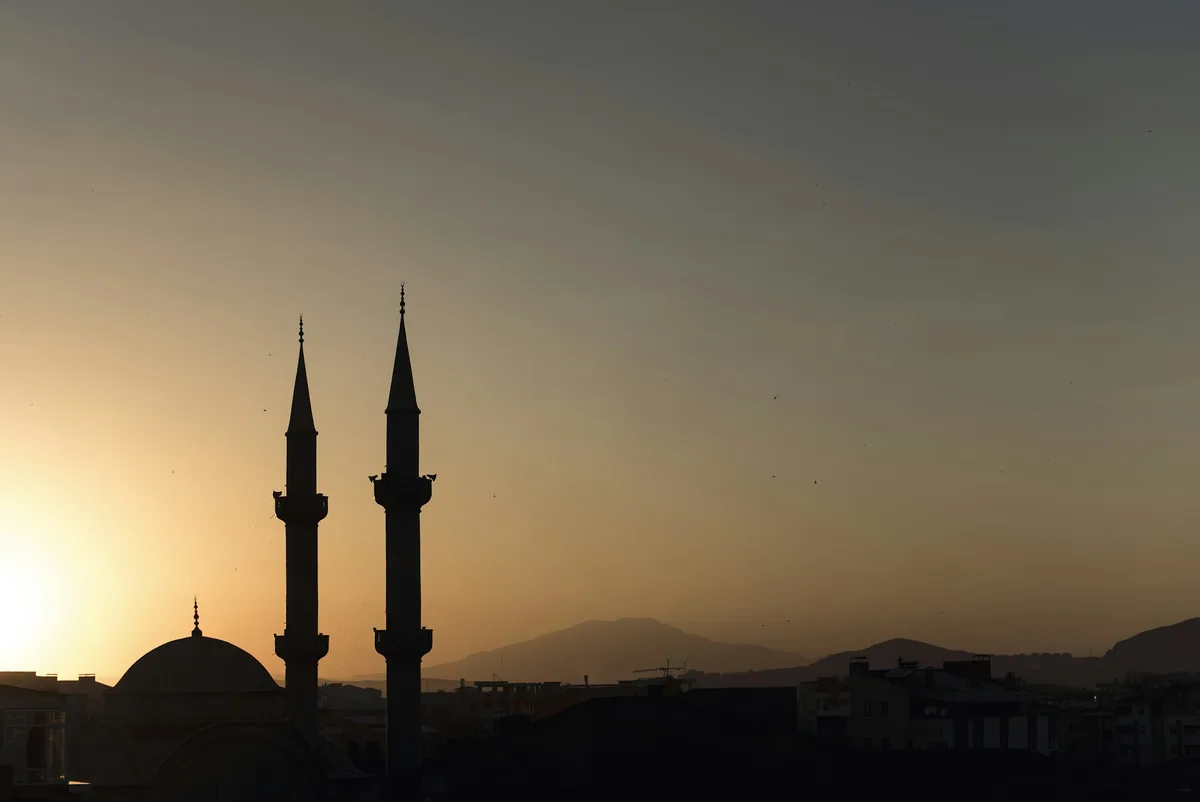
Sunni identifies a major tradition within Islam. Its development is connected to debates about authority and leadership after Muhammad (PBUH). Sunni and Shi‘i traditions share central commitments while differing on important questions of authority and interpretation. Describing Sunni Islam as one political position or one style of observance is inaccurate.[1]
A tradition, not a single institution
Sunni Muslims do not all belong to a centralized organization. Legal scholarship, religious education and local institutions take different forms. The label does not tell the reader which jurist, school or community someone follows. It also does not establish whether they are socially conservative, politically active, quietist or loosely involved in institutions.
Sunni should not substitute for ordinary Muslim, with other traditions treated as deviations from an authentic norm. A descriptive publication can explain demographic prominence without declaring theological winners. Its purpose is to make differences intelligible, not adjudicate which community has the correct claim to Islam.
The distinction between religious tradition and legal school is important. Fiqh describes jurisprudence and its methods. A person may draw on a particular school’s guidance for worship while holding political opinions that cannot be deduced from that affiliation. The categories are related, but each supplies different information.[2]
Shared scripture and interpretation
Divine unity is central across Sunni and Shi‘i traditions. Disagreements concern, among other matters, the transmission of authority and interpretation of religious sources. Shared scripture does not mean every legal conclusion or devotional practice is identical. Disagreement does not mean the traditions share nothing.[1][3]
When reporting a ritual difference or calendar decision, describe it at the level of the actual community and source. Do not automatically turn it into hostility. People can recognize theological differences while cooperating in civic and charitable life. Conversely, actual conflict should not be concealed merely to provide a reassuring portrait.
What a Texas directory can establish
A mosque may describe itself as Sunni, simply Muslim or more specifically. Use its documented public description where relevant. Do not infer affiliation from attendees’ ethnicity, architecture, photographs or a donor’s name. A place directory should not become an instrument for guessing private religious identity.
If someone says they attend a Sunni mosque, that answers a question about their religious setting. It does not reveal their view of a foreign conflict, candidate or controversial preacher. Asking the actual question is more informative than treating a religious category as a predictive device.
An evidenced problem at a Sunni institution can be reported without making every Sunni person responsible. A positive example likewise cannot support an unmeasured claim about the whole tradition. The point is not to avoid conclusions; it is to draw conclusions at the scale the evidence supports.
For beginners, keep religious identity, legal interpretation and organizational membership separate. Sunni names a broad tradition; fiqh, hadith and imam explain other parts of the picture. Together they make a complex religious world easier to understand without pretending it is simpler than it is.