Glossary
Shi‘a
Shi‘a names a family of Islamic traditions with distinctive understandings of authority through Ali and the Prophet’s family. It is not a nationality or a synonym for Iran’s government.
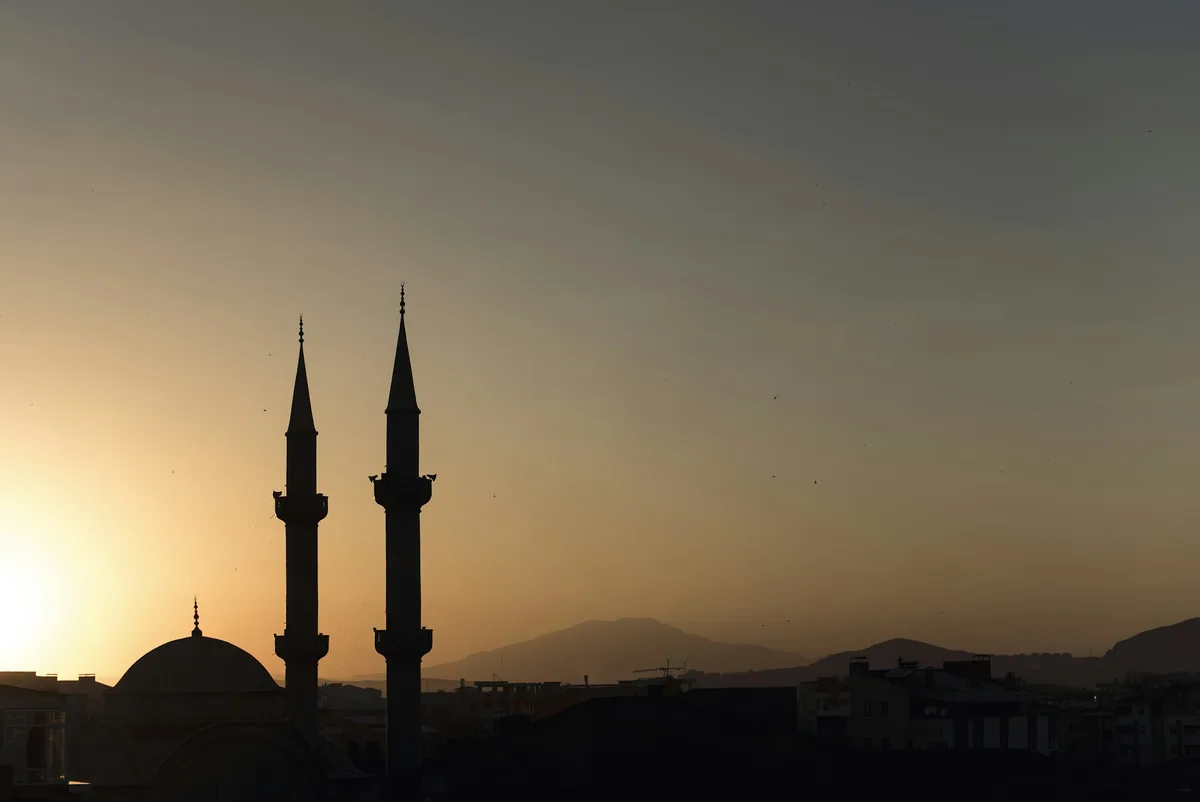
Shi‘a names a major family of Islamic traditions associated with distinctive understandings of authority through Ali and the family of Muhammad (PBUH). Shi‘i communities are internally diverse. The label is not a nationality and should not be used as a synonym for Iran’s government. Religious tradition does not, by itself, establish citizenship or political allegiance.[1]
Why Imam can mean something different
In everyday mosque usage, imam may mean the person leading prayer. In Shi‘i theology, Imam can designate a figure in a succession of religious authorities understood to inherit a distinctive role in guiding the community. The same spelling can therefore conceal an important difference. Explain the intended sense rather than translating both as an ordinary local job.[2]
Not every Shi‘i community has identical doctrines of succession or institutions. A short introduction should acknowledge that diversity without pretending to resolve it. For a specific community, use its own description and appropriate scholarship rather than treating one branch as the entirety of Shi‘i Islam.
The practice of commemorating religious history can also matter deeply. A reporter encountering an unfamiliar observance should ask what is being remembered and how participants explain it. Its appearance alone cannot establish a political objective or a relationship with a foreign state.
Shared faith and consequential disagreement
Sunni and Shi‘i Muslims share central commitments, including the Qur’an and belief in one God. They differ on questions of authority and history. Both belong in an accurate account. Describing the traditions only through conflict erases ordinary worship; describing them as identical erases convictions that matter to believers.[1][3]
A common scriptural reference does not make every interpretation of law, ritual or historical events identical. Readers can understand shared ground without assuming differences are merely superficial. They can also recognize disagreement without expecting hostility between every pair of believers.
Do not import a foreign government into a local story
Suppose a Texas institution publicly identifies with a Shi‘i tradition. This does not establish that a foreign government directs it. An allegation of external control requires evidence about governance, finances or instructions. Religious resemblance and geopolitical allegiance are not interchangeable.
The reverse holds too: religious identity does not exempt an institution from scrutiny. Statements, financial relationships and alleged misconduct can be investigated. A report should remain evidentiary. Establishing a congregation’s theology is not the same as establishing a covert state relationship.
A directory should record names, locations, operators and verified public information. Include self-described affiliation when useful and documented; do not guess from surnames, languages, clothes or photographs, and do not rank traditions as more or less American.
For neighbors and visitors, curiosity about actual practice is more constructive than geopolitical assumption. Ask what a gathering commemorates, what participation involves and who can explain it. The answer will tell you about the community in front of you. Shi‘a is a religious category with history and diversity, not a ready-made accusation or a complete biography of every person who identifies with it.