Glossary
Ummah
Ummah commonly means the community of Muslims. Religious solidarity does not make that community one government, organization or political bloc.
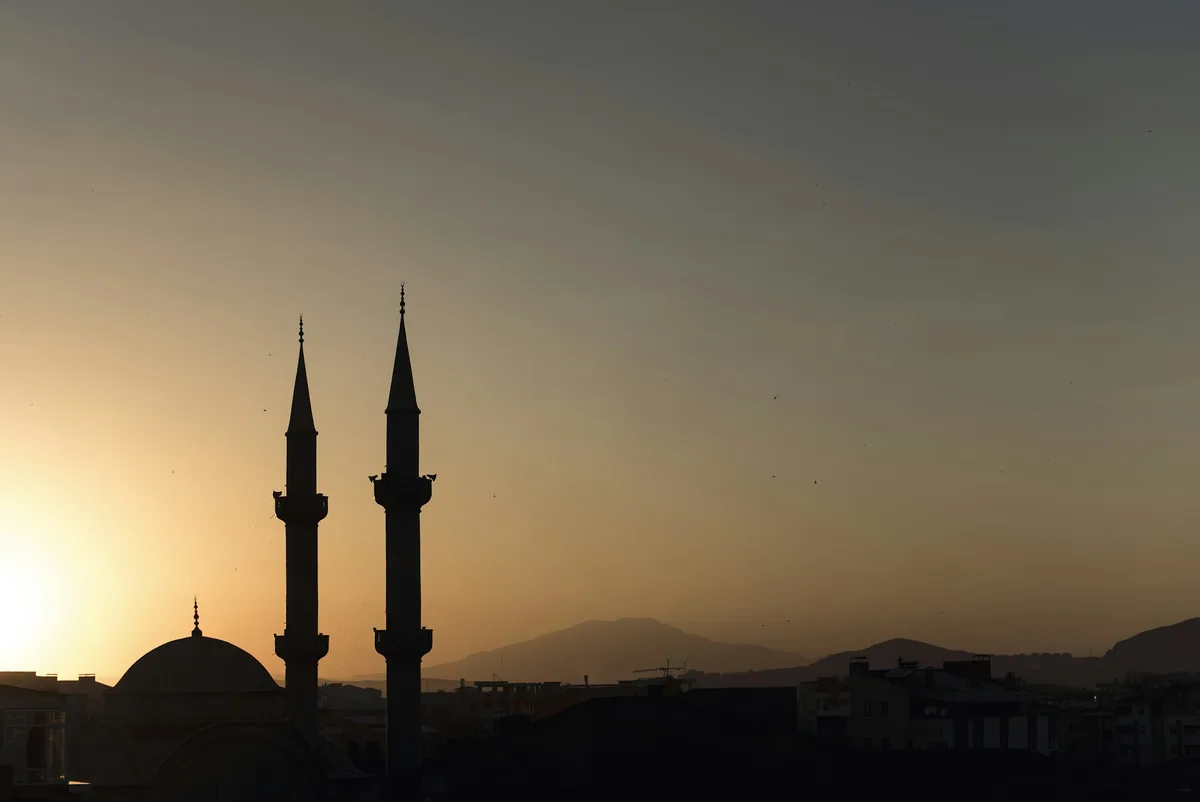
Ummah commonly refers to the community of Muslims. It expresses religious belonging across language, geography and citizenship. The word does not name a single corporation, state or chain of command. Someone can feel connected to fellow believers abroad while remaining fully attached to a hometown and country.[1]
Community is not uniformity
Muslims disagree about theology, law, political choices and community priorities. The language of a shared ummah expresses an ideal of connection, not the disappearance of differences. Confusing that ideal with actual coordination makes it easy to attribute one institution’s statements to people who have never heard of it.
The Qur’an’s account of peoples and tribes offers a counterpoint to the idea that religious community demands cultural sameness. It recognizes human difference while grounding worth in a moral rather than inherited hierarchy. This is a theological principle, not a claim that Muslim societies have always avoided ethnic prejudice or national rivalry.[2]
Religious solidarity may be expressed through concern for people suffering elsewhere, charitable work or a sense of responsibility toward strangers. None of these descriptions establishes how a particular organization is financed or governed. Institutional relationships need documentation; a shared vocabulary cannot provide it.
Religious and civic belonging
A Texas resident can belong to a family, neighborhood, profession, religious community and nation simultaneously. These affiliations sometimes create difficult questions, but their coexistence is ordinary. Concern for people elsewhere is not proof that someone rejects obligations where they live.
An allegation of divided loyalty therefore needs more than recognition of an international religious community. Examine the conduct: a donation, organizational relationship or public statement can be evaluated on its facts. Ummah adds no evidence that an action is unlawful or disloyal.
Who is speaking for whom?
A headline saying “the Muslim community believes” may conceal a weak source base. Was the statement made by an interviewee, a mosque board, a coalition or a representative survey? These are not equivalent. A poll needs its population and method; an organizational statement needs the organization’s name. Singular language about community should not manufacture unanimity.
Flattering coverage can make the same mistake. One person’s achievement does not establish a universal trait, and one event cannot represent every Muslim experience. Reporting can celebrate a contribution while preserving individuality. Otherwise, neighbors become symbols and their disagreements are made to look like contradictions.
A directory helps by providing names and relationships rather than an imaginary collective voice. It can establish which organization operates a location and where the public information comes from. Listing institutions cannot map every social connection or produce a definitive spokesperson for Muslims in the state.
Community is therefore a useful first translation of ummah. Explain how it is used in the particular conversation. It may convey affection, obligation, aspiration or grief; none automatically implies a political program. Ask who is speaking, about whom, and with what evidence of shared action. That keeps a meaningful religious idea from becoming a shortcut to conclusions the record cannot support.