Backed by Peter Thiel, incoming congressman Jace Yarbrough of Texas’ 32nd District wants to halt immigration and repeal the law that ended national-origin quotas—while casting Muslim civic life as a threat to America.
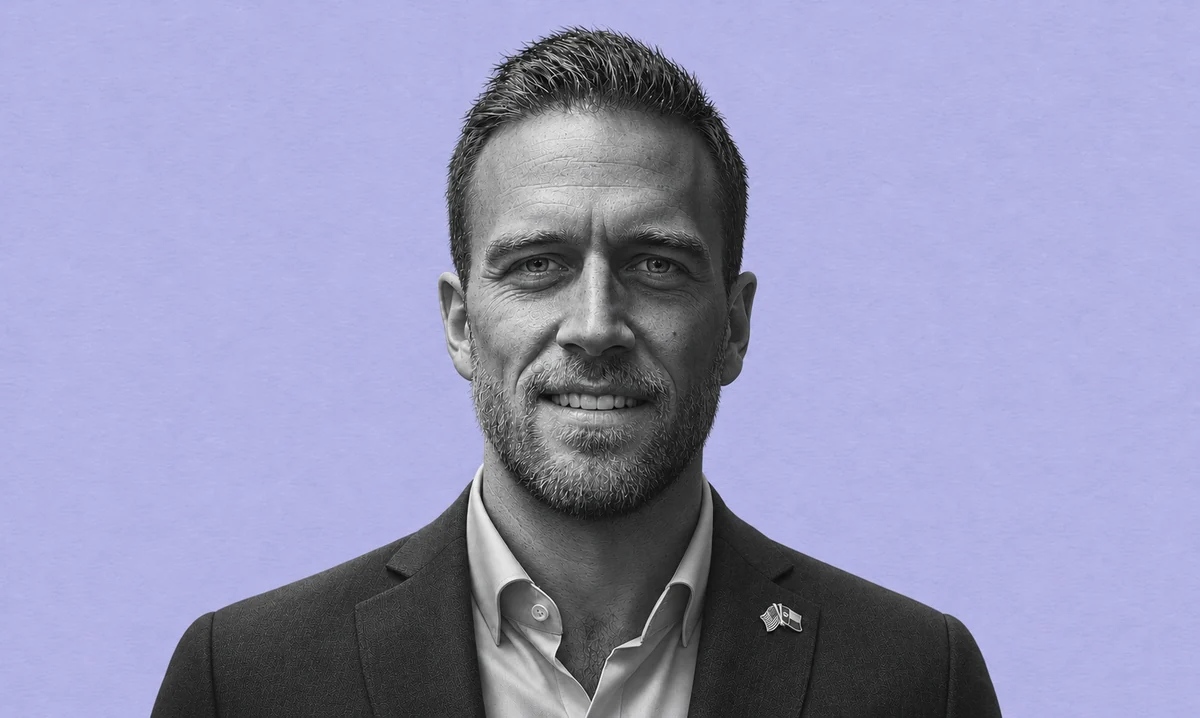
Jace Yarbrough has an impressive résumé and an ugly way of talking about his neighbors. The incoming Republican congressman for Texas’ 32nd District graduated from Stanford Law School, trained in influential conservative fellowship programs, and attracted financial backing from Peter Thiel. During the campaign, he also referred to “hordes of Islamic immigrants” supposedly arriving to establish Sharia law. The credentials deserve examination alongside the prejudice they have apparently done little to discourage. [1] [2]
Yarbrough represents a particularly useful figure for a movement seeking to make exclusion respectable. He can discuss constitutional principles, invoke Western civilization, and present himself as a defender of religious freedom. That vocabulary gives an argument intellectual furnishings. It does nothing to establish whether the argument is true—or whether the freedoms being defended extend to everyone.
Thiel’s support is concrete. The Hill reported, citing Federal Election Commission filings, that the Palantir co-founder contributed twice to Yarbrough’s campaign in December 2025: $3,500 for the primary and $3,500 for the general election. Those contributions put a recognizable billionaire’s money behind a candidate whose immigration politics were already taking shape. [2]
The scale matters. Yarbrough’s campaign reported more than $1.26 million in total receipts through October 14, according to its FEC financial summary. Thiel’s $7,000 represents a small portion of that total. Its significance lies in the candidate he chose to support and the wider company that candidate keeps. [3] The Guardian also identified Claremont Institute board chair Thomas Klingenstein and venture capitalist Nate Fischer among Yarbrough’s donors. [4]
The institutional connections are equally specific. Yarbrough’s campaign biography lists fellowships at the John Jay Institute for Faith, Society and Law, Alliance Defending Freedom’s Blackstone Legal Fellowship, and Claremont. Claremont independently identifies him as a 2020 John Marshall Fellow. These are identifiable relationships with organizations that cultivate conservative lawyers and political leaders. [1] [5]
His explanation of Claremont’s appeal is revealing. In an alumni interview, Yarbrough criticized conservatives who seek accommodation with progressives and praised the institute’s rejection of that approach. He described a political strategy in which conservatives exercise their acquired power rather than restrain themselves in hopes of winning their opponents’ approval. In discussing the approach he rejected, he characterized accusations of prejudice as “baseless allegations of bigotry and phobia.” [6]
That offers a convenient defense against scrutiny. An accusation of bigotry becomes another demand for surrender, and refusing to reconsider becomes evidence of courage. But the accusation still has to be answered on its merits. A politician who describes immigrants from a particular religion as a threatening horde owes the public something more substantial than an account of how unfairly conservatives are treated.
Yarbrough’s proposals make that scrutiny necessary. He has called for repealing the 1965 Hart–Celler Act. The law abolished the national-origins quota system that had structured American immigration around ancestry and birthplace. Its historical significance is straightforward: Congress dismantled an explicitly discriminatory framework governing who could enter the country. [2] [7]
Repealing a law does not, by itself, specify every provision of its replacement. Yarbrough favors merit-based admissions. [8] The questions concern what he would preserve, what he would remove, and how he would prevent judgments about merit from becoming judgments about which religions or national origins belong here.
His earlier interview with The Dallas Express supplies additional context. He supported a temporary immigration halt, an end to family migration he characterized as chain migration, and nationwide restrictions on Sharia practices. He described the political climate as a “cold civil war.” These positions belong together in assessing the agenda he intends to bring to Washington. [9]
The racial implications of immigration policy deserve scrutiny in their own right. His treatment of Muslims also requires precision: Islam is a religion practiced by people of many races and nationalities. Collapsing those people into an invading population turns religious identity into a proxy for foreignness. It encourages suspicion of the citizen alongside the immigrant, the American-born child alongside the newly arrived parent. Calling that suspicion a concern about civilization gives it a grander vocabulary without supplying evidence.
Consider the East Plano Islamic Center. Yarbrough cited EPIC’s lawsuit as evidence of “Islamification.” [8] The mosque’s actual petition, filed in a Texas court, alleged that evangelical demonstrators used bullhorns and loudspeakers to disrupt Friday prayers. It sought relief under nuisance law and Plano’s noise ordinance. The requested injunction also reached the distribution of material offensive to Islam, a demand that deserves scrutiny for its implications for speech. The document presents a dispute over competing rights and the permissible scope of an injunction—questions the American legal system exists to adjudicate. [10]
Fox reported dismissal and a pending appeal. [8] Whatever the eventual outcome, a litigant’s request for relief can be evaluated without converting its religion into evidence of a civilizational conspiracy. A constitutional lawyer should be especially capable of making that distinction.
Yarbrough understands the value of seeking judicial protection for his own religious expression. First Liberty Institute represented him in litigation challenging military discipline imposed after a retirement-ceremony speech. His lawyers argued that the government had violated his speech and religious-exercise rights. His campaign biography makes defending his own First Amendment rights part of his political identity. [11] [1]
His case also illustrates why legal precision matters. In April, a federal judge dismissed the individual-capacity religious-freedom claim against General B. Chance Saltzman. That ruling addressed a particular claim against a particular defendant; it did not resolve every aspect of Yarbrough’s litigation. Courts make those distinctions because the allegations, legal standards, and relief sought matter. Politicians ought to extend the same care to cases involving Muslims. [12]
Texas Muslim has examined the expense and uncertainty involved in defending religious practice in “The Muslim Tax: In Texas, Religious Freedom Comes With a Legal Bill.” Yarbrough’s record raises a related question about political legitimacy: whose appeal to the courts gets recognized as a defense of freedom, and whose gets presented as a threat?
His supporters are helping elevate a politician whose record warrants that question. The money establishes financial backing. The fellowships establish institutional relationships. His interviews and proposals establish the agenda for which he can be held accountable. Together, they explain why attention should extend beyond the latest inflammatory remark to the resources and credentials accompanying it into Congress.
Yarbrough is entitled to his Christian faith, his conservative convictions, and his arguments about immigration. His constituents are entitled to examine whether those arguments treat them as equal members of the country he will help govern. A Stanford education and a billionaire donor do not relieve him of that obligation. They give a politician with exclusionary ideas more influence—and give the public more reason to read the fine print.
About this story
Opinion by Omar Afra. Numbered citations refer to the sources listed below, checked November 17, 2026. Campaign-finance figures come from the Federal Election Commission’s committee summary and from reporting that cites FEC filings. The lead image is an editorial illustration.
- Place covered
- Texas, United States
Sources
- 1About Jace — Jace Yarbrough for Congress · retrieved 2026-11-17
- 2Yarbrough wins Texas House election for redistricted Julie Johnson seat — The Hill, republished by AOL · retrieved 2026-11-17
- 3Jace Yarbrough for Congress: campaign financial summary — Federal Election Commission · retrieved 2026-11-17
- 4Texas congressional candidate with extremist views backed by hard-right donors — The Guardian · retrieved 2026-11-17
- 52020 John Marshall Fellows — Claremont Institute · retrieved 2026-11-17
- 6Jace Yarbrough: alumni interview — Claremont Institute · retrieved 2026-11-17
- 7Overturning Exclusion, Limiting Immigration — U.S. House of Representatives, History, Art & Archives · retrieved 2026-11-17
- 8Incoming GOP congressman backs halting all immigration to US, warns about Sharia law in Texas — Fox News · retrieved 2026-11-17
- 9Jace Yarbrough Says Texas 32 Must Deliver Reinforcements for President Trump — The Dallas Express · retrieved 2026-11-17
- 10East Plano Islamic Center v. Thurman et al.: plaintiff’s verified original petition — Collin County District Court filing; copy hosted by defendants’ counsel · retrieved 2026-11-17
- 11Jace Yarbrough: case summary and legal filings — First Liberty Institute · retrieved 2026-11-17
- 12Yarbrough v. Saltzman, Document 80: memorandum opinion and order — U.S. District Court for the District of Columbia, via Justia · retrieved 2026-11-17
About the author
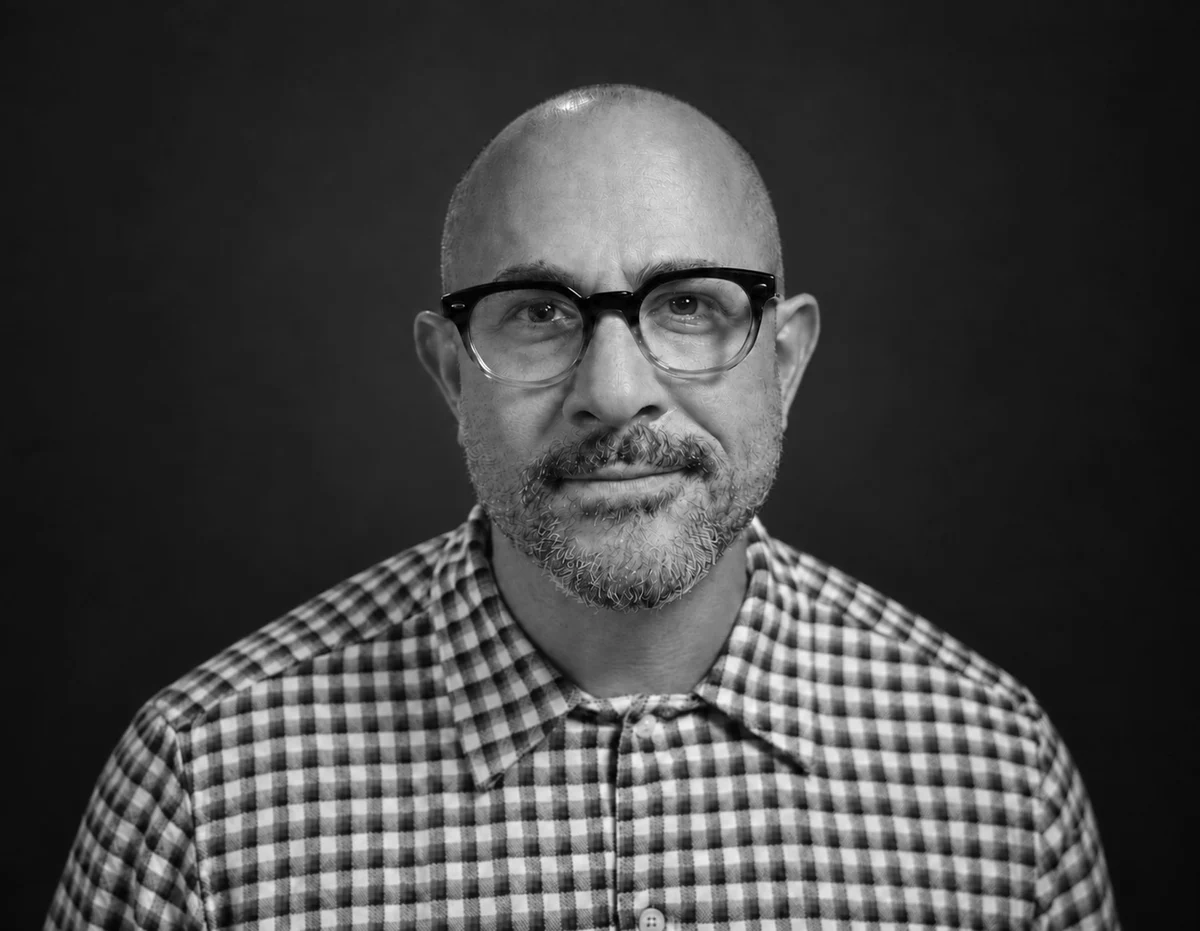
Omar Afra is a Houston-based publisher and the founder and editor of Texas Muslim. He publishes Testset and Live Index and founded Free Press Houston.