Glossary
Eid al-Fitr
The festival marking the end of Ramadan’s fasting month. Local celebrations and prayer services have their own announced schedules.
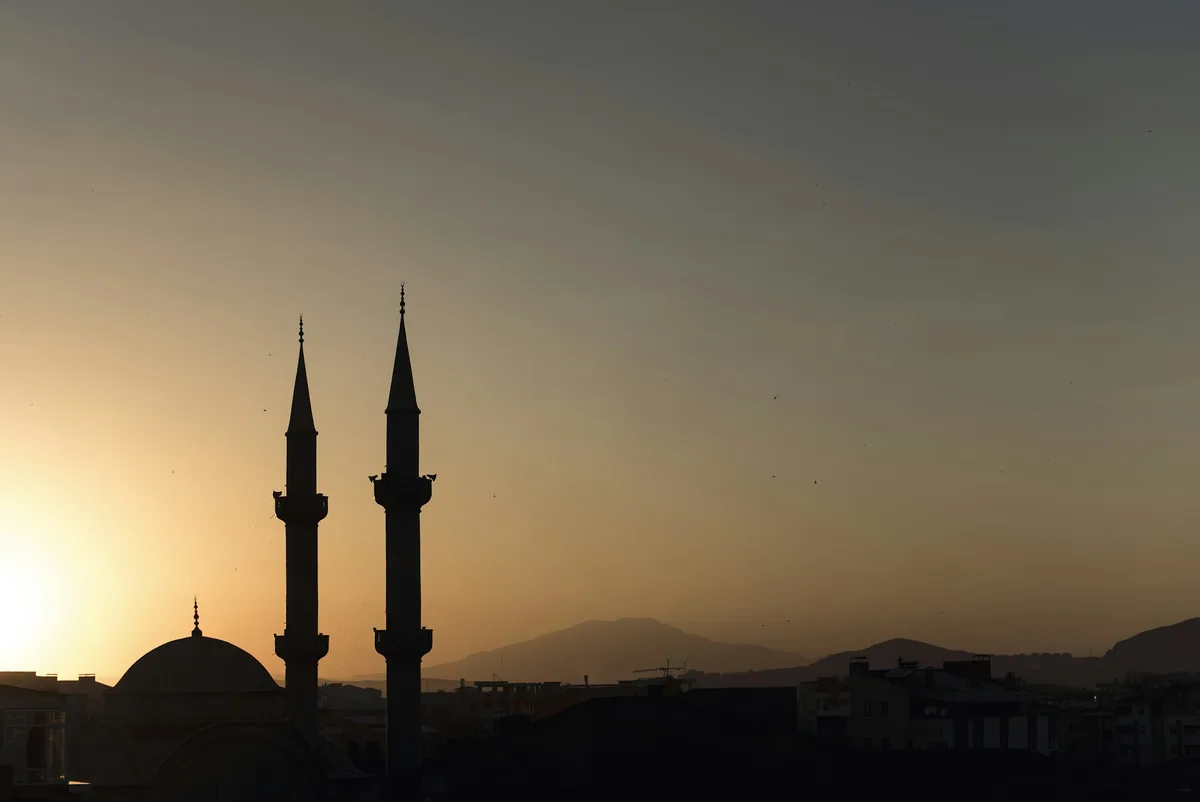
Eid al-Fitr is the festival at the end of Ramadan. It marks the conclusion of the fasting month, not the end of religious observance. Communal prayer, visits, food and celebration may be part of the occasion. People often shorten the name to Eid, but that word also appears in Eid al-Adha, another major festival with different associations.[1]
A calendar date needs a source
The Islamic calendar is lunar, and communities can differ over how a month’s beginning is established. A national calendar should not replace the announcement of a Texas institution hosting a service. A listing is useful when it identifies the organizer and the actual schedule announced.[1]
This is practical, not mysterious. A family arranging work or school needs the event it plans to attend, not a generalized dispute over calendar methods. Dates can differ. A publication should acknowledge that possibility instead of printing a guessed prayer time as confirmed information.
Celebration following restraint
Ramadan joins fasting with worship and reflection. Its ending is consequently more than the conclusion of a diet. The Qur’an relates the month to guidance and gratitude, while descriptions of Eid connect communal celebration with the completed observance.[2]
For families, the day can also bring together people usually separated by work, school and caregiving schedules. Reporting can ask what the occasion means without demanding one universal account. Generational preferences and individual experiences belong to community life; they do not show that the celebration lacks meaning.
Charitable obligations and giving are also part of how Muslims describe the holiday. Specific requirements should be explained by qualified sources rather than reduced to an assumed fee for entry. A donation request at a particular event should be identified as that request, not confused with the entire tradition.[1]
What the gathering does not prove
A large event is not automatically political mobilization. A reserved park, rented hall or crowded parking area may reflect a community’s need for space. If permits, public costs or access are at issue, report documents and apply comparable questions to other large gatherings.
A holiday greeting from an official likewise does not prove support for every position held by members of the religion. Recognition and political endorsement are different acts. Confusing them turns ordinary courtesy into suspicion. Religious exercise and expression do not fall outside the constitutional framework because the festival’s name is Arabic.[3]
Visiting and photographing
Ask whether an advertised gathering includes a service, social celebration or both. Follow the host’s instructions about entry, shoes, photography and visitor seating. Do not use identifiable attendees to imply support for an unrelated argument. Children’s participation warrants particular care.
A reliable listing carries sources and dates and distinguishes known facilities from unknown ones. This helps a neighbor understand the occasion without pretending the directory has assessed every aspect of the institution.
The basic explanation can stay simple: Eid al-Fitr celebrates the end of Ramadan. Further details should come from the people and organization whose event is being described, not assumptions attached to the word Eid.