Editorial · Elections
Texas Muslims Could Be the Deciding Factor in the 2026 Midterms
Democrats learned over Gaza that Muslim votes aren’t theirs to inherit. Texas Republicans have spent the past year treating Muslim institutions like enemy territory. Now, with the governor’s mansion and a U.S. Senate seat suddenly in play, that might prove to be one of the costliest political wagers in Texas.
Author’s observations and opinions · No candidate endorsement
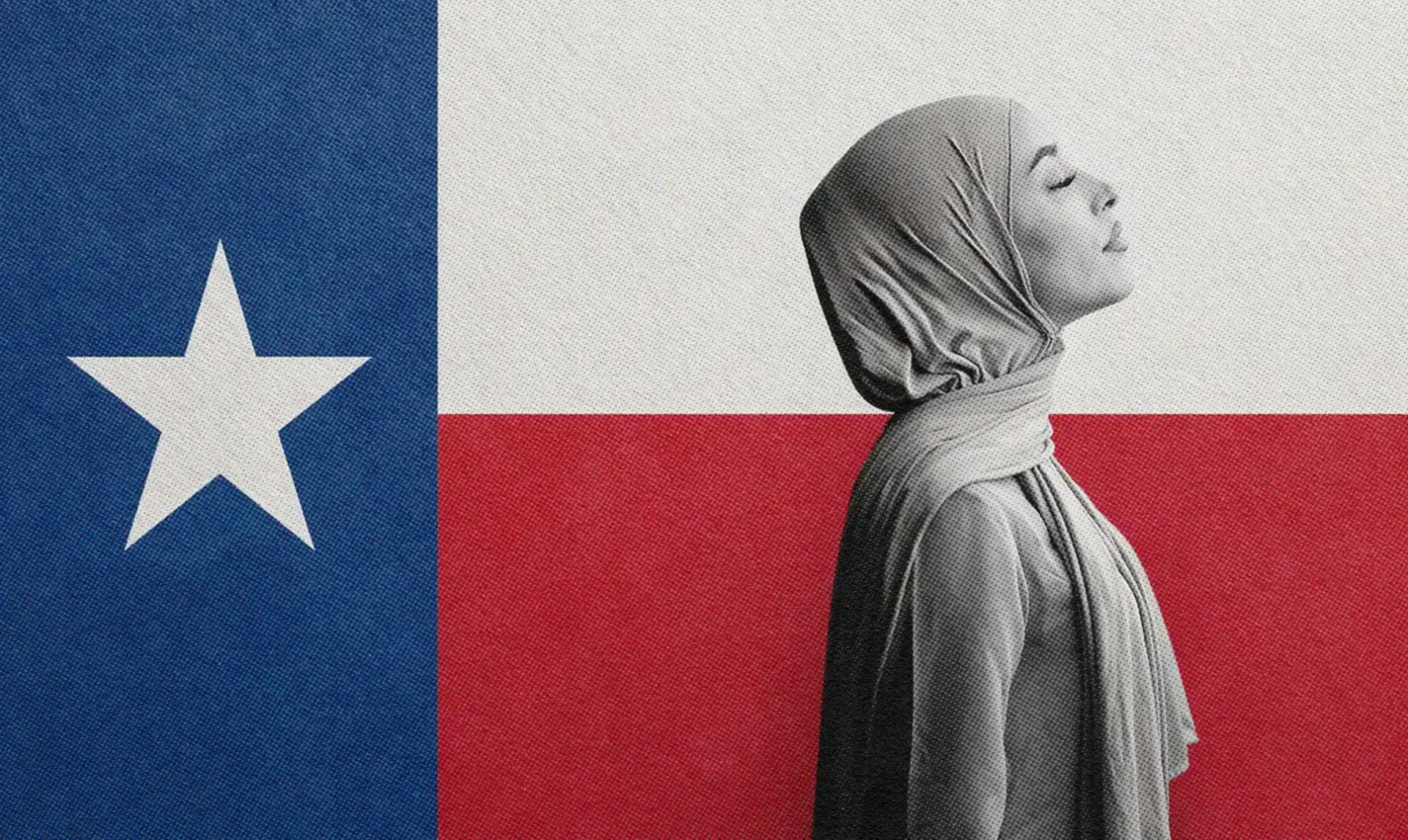
In June, Mohamed Hussein, a conservative Muslim Texan, walked into the state Republican convention in Houston looking for common ground. Instead, he was told to convert to Christianity or leave the country. He left in tears. That ought to bother any Texan who believes we don’t have to share a neighbor’s religion to share a state. It ought to bother Republican campaign consultants, too. With November’s elections suddenly competitive, a community treated like a political problem may turn out to be part of the arithmetic. The Texas Tribune
As of October 9, RealClearPolling’s gubernatorial polling average puts Gov. Greg Abbott just 1.9 percentage points ahead of Democrat Gina Hinojosa. In the two-candidate U.S. Senate polling average, Democrat James Talarico leads Republican Attorney General Ken Paxton by 2.8 points. Individual polls disagree, and Texas Democrats haven’t won statewide since 1994. Nobody should mistake a survey for an election result. But when two statewide contests are measured in single digits, dismissing an entire community as politically irrelevant starts to look like mighty poor math.
What Democrats learned in 2024
Washington should have learned that lesson in 2024. A Council on American-Islamic Relations exit poll found that 69 percent of Muslim respondents voted for Joe Biden in 2020. Four years later, its survey of 1,575 verified Muslim voters found 53.2 percent reporting a vote for Jill Stein, 21.4 percent for Donald Trump and just 20.3 percent for Kamala Harris. The two surveys used different methodologies, so they cannot establish precisely how individual voters changed their allegiances. What they do document is a remarkable collapse in support for the Democratic presidential nominee among the Muslims surveyed. USC Annenberg Media
The elephant in the room is Gaza. Many Muslim Americans regarded the Biden-Harris administration’s continued military support for Israel as complicity in genocide. That isn’t language without an evidentiary foundation: Amnesty International concluded in December 2024 that Israel had committed genocide in Gaza, and a United Nations investigative commission reached that conclusion in September 2025. Israel rejects those findings. Survey research found overwhelming Muslim dissatisfaction with Biden’s handling of the war. Harris’s unwillingness to break meaningfully with that policy carried a political price. For many voters, withholding support wasn’t apathy. It was a deliberate refusal. Reuters on Muslim and Arab American voters
Michigan supplied a vivid example. Trump won the state by 80,103 votes. In heavily Arab American Dearborn, Harris received roughly 15,000 votes, about half Biden’s 2020 total, while Stein drew nearly 7,700. Still, claiming Muslims single-handedly elected Trump goes beyond what the evidence supports. Arab Americans are not all Muslim, Stein received 44,607 votes statewide, and Trump won the Electoral College 312 to 226. Gaza mattered enormously to a portion of the electorate. That is different from proving it was the sole cause of the national result. The more durable lesson is that a constituency once considered dependable demonstrated it could no longer be taken for granted. Reuters
Where the Texas votes are
Texas presents an altogether different electoral map, and geography is where this story gets interesting. The 2020 U.S. Religion Census estimated 313,209 Muslim adherents statewide, including 91,156 in Harris County, 60,393 in Dallas, 37,413 in Collin, 31,421 in Tarrant, 15,840 in Fort Bend and 6,868 in Denton. Together, those six counties account for roughly 243,000 people, nearly 78 percent of the statewide estimate. Crucially, adherents includes children and other participants in religious communities. It does not mean registered voters, eligible voters or people who share a political preference. These figures are six years old, too. Anybody presenting them as a ready-made 2026 voting bloc is selling snake oil by the gallon.
Still, consider Fort Bend County, home to established Muslim communities around Sugar Land and the southwest Houston suburbs. Official county returns show Harris carried Fort Bend in 2024 by just 5,718 votes, receiving 179,310 to Trump’s 173,592. The county isn’t reliably Republican anymore, although plenty of its precincts remain solidly red. North of Dallas, Collin County tells a different story: Trump won by more than 57,000 votes. These aren’t interchangeable political environments, and a mosque cannot flip an election on command. But the overlap between Muslim population centers, competitive suburbs and changing voting habits deserves considerably more attention than it has received.
Statewide margins demand equal caution. Ted Cruz defeated Beto O’Rourke by 214,921 votes in 2018, then beat Colin Allred by roughly 959,000 in 2024. Texas has produced close races, not a continuous string of them. For Muslim voters to prove decisive in November, a race would have to be close enough and their participation or candidate preferences would have to alter the outcome. No reliable Texas-specific dataset presently establishes how many eligible Muslim voters could do that. What we do have is competitive polling, concentrated communities near metropolitan political fault lines and a political climate that has given those communities plenty of reason to pay attention. Texas Secretary of State election archives
Texas Republicans and Muslim institutions
In November 2025, Abbott issued a proclamation designating CAIR a foreign terrorist organization under Texas law. The organization denied the allegations and challenged the proclamation in federal court. In February, Paxton filed suit seeking to prevent CAIR and its Texas chapters from operating. State officials say they are confronting terrorism and defending constitutional order. Those allegations remain contested, however, and a governor’s proclamation is neither a federal terrorist designation nor a substitute for due process. Whatever one’s politics, the prospect of government attempting to dismantle an American civil-rights organization ought to invite scrutiny rather than applause.
The Republican Party of Texas went further at its June convention. Its official legislative priorities, under the heading “Don’t Sharia Our Texas,” call for criminal punishment, exclusion from public service, denaturalization and deportation for advocacy or implementation of what the party describes as Sharia law. These are party proposals, not enacted statutes. Texas can enforce constitutional limits, prosecute fraud and prohibit religious discrimination without targeting Islam. There is a considerable distance between preventing coercive conduct and treating an ordinary Muslim’s religious vocabulary as evidence of sedition. Party leaders who cannot distinguish between the two should expect their judgment to be questioned.
The Republican Party’s pressure hasn’t been confined to convention rhetoric. Government officials investigated the North Texas development now called The Meadow over alleged discrimination, allegations its developers disputed. Islamic private schools were initially excluded from the state’s voucher program, with litigation later allowing applications without guaranteeing admission. In June, Texas’s State Board of Education adopted revised social studies standards that Muslim advocates condemned as inaccurate and hostile to their faith, including language portraying the Prophet Muhammad (PBUH)’s military campaigns as brutal. Each controversy has its own legal and policy particulars. Taken together, they reveal just how frequently Muslim institutions have become the subject of official suspicion. The Texas Tribune
There’s a particularly Texan twist to all this. S. Javaid Anwar, a prominent Muslim oil executive and longtime Republican donor, is among Abbott’s largest financial supporters. According to an October 8 Houston Chronicle analysis, Anwar has contributed more than $4.1 million to Abbott’s current reelection effort. That is worth contemplating before anybody starts talking about a monolithic Muslim vote. Muslim Republicans aren’t imaginary. Neither are Muslim Democrats, independents, Libertarians or people thoroughly fed up with both major parties. They disagree about taxes, schools, abortion, foreign policy and just about everything else Texans disagree about. That’s precisely what makes indiscriminate hostility toward the community such a strange political strategy. It risks alienating people who might otherwise have been allies.
Meanwhile, something measurable is happening on the ground. In September, Islamic Society of Greater Houston president Emran Gazi said mosque-based voter registration efforts were signing up approximately 1,000 people a week. That is an organization’s reported pace, not an independently audited statewide count, and registration does not establish how anyone intends to vote. Nevertheless, it indicates an unusual level of civic attention. The same month, Houston-area Muslim leaders publicly challenged the state’s new social studies standards. These are not the actions of a community entirely content to sit out Texas politics. Houston Chronicle
What comes next
I founded Texas Muslim with a purpose considerably more durable than helping one political party win an election. The objective is to build an educated, informed and connected Muslim constituency equipped to understand public policy, evaluate candidates, defend civil liberties and confront oppression against our community. That requires independent reporting, accessible public records, serious research and a willingness to examine Democrats with the same rigor we apply to Republicans. Our 2026 Texas Muslim voter guide covers 18 statewide races, presenting candidate positions, documented records and financial information so readers can reach their own conclusions. We endorse no candidate, and this article should not be mistaken for an endorsement.
If Republicans retain control of Texas’s statewide offices, the need for strong, independent Muslim civic institutions will become more urgent, not less. But that work cannot begin and end with the ballot box, nor should it depend on which party happens to win. Religious freedom needs defenders between elections, when regulations are written, school standards are adopted and legal precedents are established. It also requires partnerships with Christian, Jewish and nonreligious Texans who recognize that the First Amendment isn’t a members-only benefit. A community’s political influence is ultimately measured by its ability to participate in public life without having to ask permission.
These are my observations and opinions, not a recommendation to vote for or against any particular candidate. Democrats learned in 2024 that Muslim votes cannot simply be inherited. Texas Republicans may be fixing to learn that Muslim Texans cannot be insulted, investigated and legislated against without political consequences. Whether those consequences prove decisive in November remains to be seen. But with the governor’s race and U.S. Senate contest as close as current polls suggest, the cost of that gamble could be catastrophic for the GOP.
More importantly, the stakes extend well beyond either party’s fortunes. Regardless of who wins on November 3, Texas Muslims have an opportunity to become a more organized, informed and consequential presence in the state’s civic life. Not a voting machine. Not a constituency for sale. Not a community that must agree on everything before defending its right to belong. Just Texans who understand that political power, like a good fence, is worth building before somebody starts trampling your property. This is Texas. We have room for more than one kind of prayer, and we’d better have room for more than one kind of Texan.
Sources
- 1The Texas Tribune
- 2RealClearPolling’s gubernatorial polling average
- 3two-candidate U.S. Senate polling average
- 4USC Annenberg Media
- 5Amnesty International concluded in December 2024
- 6Reuters on Muslim and Arab American voters
- 72020 U.S. Religion Census
- 8Official county returns
- 9Texas Secretary of State election archives
- 10proclamation designating CAIR a foreign terrorist organization under Texas law
- 11Paxton filed suit
- 12legislative priorities
- 13adopted revised social studies standards
- 14The Texas Tribune
- 15October 8 Houston Chronicle analysis
- 16Houston Chronicle
2026 · Elections
Explore the 2026 Texas Muslim Voter Guide
Read the records in 18 statewide races and build your private ballot. No endorsements.