Interview
interview: Pat Dixon, Libertarian Candidate for Texas Gov
Texas Muslim asked Pat Dixon, the Libertarian candidate for governor of Texas, about religious liberty, equal treatment under the law, and the role of state government in the lives of Muslim Texans. In this written interview with Omar Afra, Dixon addresses religious profiling, school choice, surveillance, and the limits of government authority. As of publication, Gina Hinojosa and Greg Abbott had not responded to our inquiries.
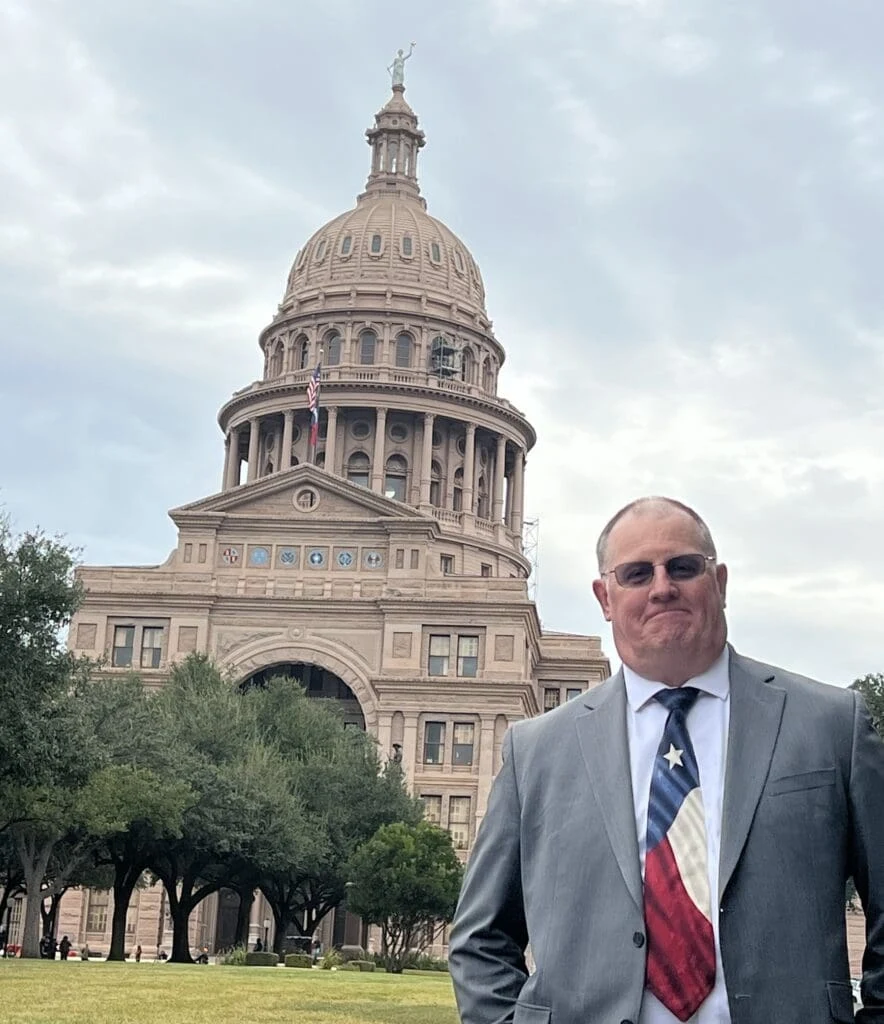
The government should neither favor nor target a religion. It should protect individuals from actual threats and enforce neutral laws, while leaving peaceful religious practice alone
Pat Dixon
1. Your statement defends Muslim Texans as peaceful and productive members of society. Should their rights need that justification in the first place? As governor, how would you challenge the idea that Muslims must continually prove their loyalty to receive the same presumption of belonging as other Texans?
A1: Nobody has to prove loyalty. An individual is innocent until proven guilty. I do not assume anyone is violent based on their religion. Regardless of a person’s religion, if their words or actions are a legitimate threat, law enforcement should act to protect innocent people.
2. You question the evidence behind Governor Abbott’s designation of the Council on American-Islamic Relations as a terrorist organization. Would you seek to rescind that Texas designation, and what evidence and opportunity to contest allegations should be required before the state takes such action against any organization?
A2: Again, innocent until proven guilty. I would rescind the designation unless the state can demonstrate, through established legal procedures and reliable evidence, a legitimate statutory basis for it. Government should not label an organization a terrorist organization based merely on political disagreement, association, ideology, or untested allegations—but if the state has evidence of actual criminal conduct, it should be handled through established legal processes with due process.
3. You distinguish voluntary Islamic arbitration from claims that Muslims are imposing religious law on Texas. Would you veto legislation that singles out Islamic arbitration while permitting comparable Christian or Jewish practices? What safeguards should apply equally to every religious arbitration system to protect participants from coercion?
A3: I see no role for government to interfere with private religious practices. I would veto any legislation targeting a religion for their practices unless it is doing harm to innocent people. The same safeguards against coercion, fraud, or denial of legal rights should apply equally to every religious or secular arbitration system.
4. You criticized Abbott’s funding threat over the Grand Prairie Eid celebration. The event was initially advertised as “Muslim only,” then revised to welcome other faiths under a modest dress code. What rule should govern private religious events at publicly owned facilities, and when, if ever, should a governor intervene?
A4: If cities are excluding targeted religions and permitting other religions access to services, this is unacceptable discrimination and the state should act. A government facility should have viewpoint and religion neutral rules. If it permits one religious group to use it, it should not deny another religious group access because of its faith. To be clear, this was a private event rented at a city-owned venue, not a city event in which the city organized and sponsored the event.
5. You have explicitly endorsed separation of church and state. Would you oppose state-sponsored Christian devotional instruction or displays in public schools even if a majority of voters supported them? Where do you draw the line between teaching students about religion and using government authority to promote a faith?
A5: Government should have no role in promoting or directing religious devotion. Religious instruction is best done through parents, private schools, or religious institutions. I would oppose government-sponsored devotional instruction or displays even if they were supported by a majority of voters, because constitutional rights should not depend on majority preference. Teaching about religion academically is fine, but government promoting devotion is not.
6. Your education proposal would give every child funding that follows them to their chosen school. Would Islamic schools qualify under exactly the same standards as Christian schools? Conversely, should a private school receiving public money be permitted to reject a child solely because that child is Muslim?
A6: Yes. If the state creates a school-choice program, religious schools should be eligible on exactly the same terms regardless of whether they are Muslim, Christian, Jewish, or another faith. I also believe private schools should retain substantial autonomy over admissions, subject to applicable civil-rights laws.
7. Consider a landlord who refuses to rent to Muslims, or an employer who refuses to hire them because of their religion. Should the state prohibit that conduct, or should the owner’s freedom of association prevail? Where does your libertarian philosophy place the boundary between private liberty and enforceable protection against discrimination?
A7: As a Libertarian, I believe freedom of association is an important private liberty. At the same time, existing federal and state law prohibits discrimination in employment and housing, and I would enforce those laws. I do not believe government should attempt to regulate every private association or force people to be personally tolerant. My position is that the law should establish clear, generally applicable rules, while individuals and private organizations retain substantial freedom of association within those rules.
8. You argue that Texas should not use its investment portfolio to conduct foreign policy. Does that principle also require repealing Texas’s restrictions on government contracts with companies that boycott Israel? Which changes would you pursue as governor, and which would require cooperation from the Legislature or comptroller?
A8: Most actions in this regard require cooperation with the legislature and/or comptroller. The authority of the governor of Texas is more limited than in other states. I would not exclude a business due to their political or foreign policy preferences. Awarding bids to the most qualified firms at the best price while adhering to ethical standards should be the policy. My administration would not use state contracting or investment decisions to punish companies for their political views, and I would work with the Legislature and comptroller to remove policies that require such viewpoint-based exclusions.
9. Your surveillance proposal calls for warrants, independent oversight, and limits on government purchases of private data. Would you prohibit state agencies from monitoring mosques or compiling information about worshippers solely because of their religion? What remedy should Texans have if officials violate those protections?
A9: State agencies should not monitor a mosque or compile information about worshippers merely because of their religion. Any surveillance must have a legitimate law-enforcement basis and comply with constitutional warrant requirements and independent oversight. Some potential remedies include can lawsuits against officials who violate these protections, evidence gathered illegally can't be used, end qualified immunity for officials who violate these protections, and improperly collected data is purged.
10. Assume the Legislature rejects your religious-liberty agenda and defending an unpopular Muslim organization costs you political support. What could—and would—you still do using the governor’s existing authority? Please identify one action you would take within your first 100 days that Muslim Texans could use to judge your commitment.
A10: My record shows I will defend my principles even if there is political cost. I would start by declaring that the Sharia law scare tactic is uncalled for and as governor I will not target any religion. I would also direct relevant state agencies to review policies and training for religious neutrality and protection against religious profiling, and make the results public.
Sources
- 1Pat Dixon — official Libertarian Party candidate profile and photograph — Libertarian Party