Research
Finding Islam-related records in Rice’s Boniuk archive
A documented 2013 Islam panel sits within a broader interfaith collection. The finding aid tells readers what to request and how.
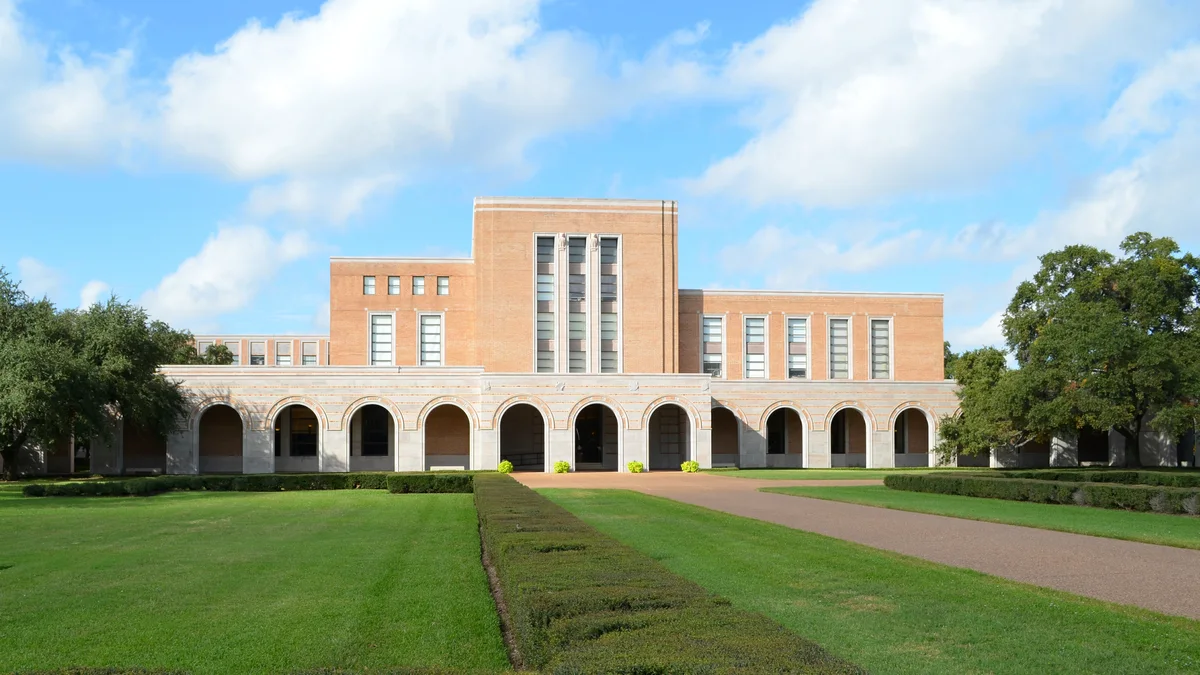

A researcher looking for a dated record of interfaith discussion about Islam in Houston can start with Rice University’s Boniuk Institute records. The Woodson Research Center finding aid identifies the collection as UA 0380. It describes a broader institutional archive, rather than a complete archive of Houston Muslims or a collection held by Texas Muslim. [1]
A precise starting point
One item is titled “Islam panel, 2013-02-21.” Rice locates it in Box 3, Folder 13. That description establishes a dated folder in the archive; it does not, by itself, establish who spoke, what anyone said or whether a recording exists inside. The item page is a locator for further research, not a transcript. [2]
The Box 3 inventory also identifies “Future of Muslims,” dated November 10, 2012, in Folder 9, alongside other interfaith-event material. These neighboring records offer leads for studying the institution’s programming without treating every folder as an event that Texas Muslim independently reported. [3]
The wider collection
Rice’s finding aid explains the development from the Boniuk Center, created in 2004, to the expanded institute founded in 2013. Its arrangement includes administrative, event, financial and audiovisual material, among other series. Those categories help a researcher distinguish an event notice from a later report or a recording. [1]
A useful request names the collection identifier, box, folder and research question. For example, a student studying interfaith programming can ask what material is in the February 2013 panel folder and whether related files document the participants or event format. An answer requires consulting the material; a folder title cannot substitute for it.
Access and use
Rice says these records are stored offsite and require 24-hour retrieval notice. Its finding aid directs readers to Woodson staff at woodson@rice.edu or 713-348-2586. It also says permission to publish material from the collection must be obtained from the Woodson Research Center. Reading a finding aid is different from receiving permission to reproduce its photographs or documents. [1]
Keep the item’s citation attached to notes and quotations when consulting it. Identify a document’s creator and date before treating its statements as evidence of a community’s position. If the contents do not answer the question, say so.
The Texas Muslim archive and history overview provide additional routes into the record. Rice’s TIMEA collection answers a different historical question: how Western travelers represented the Middle East.
Sources
- 1Rice University Boniuk Institute records, UA 0380 — Woodson Research Center, Rice University · retrieved 2026-10-05
- 2Islam panel, February 21, 2013, Box 3 Folder 13 — Woodson Research Center, Rice University · retrieved 2026-10-05
- 3Boniuk Institute records, Box 3 inventory — Woodson Research Center, Rice University · retrieved 2026-10-05