Faith explainer
Prayer, Repentance and the Work of Becoming Different
Islamic ideas of tawbah and remembrance connect mercy with responsibility. They offer a vocabulary for change without promising that words alone repair every harm.
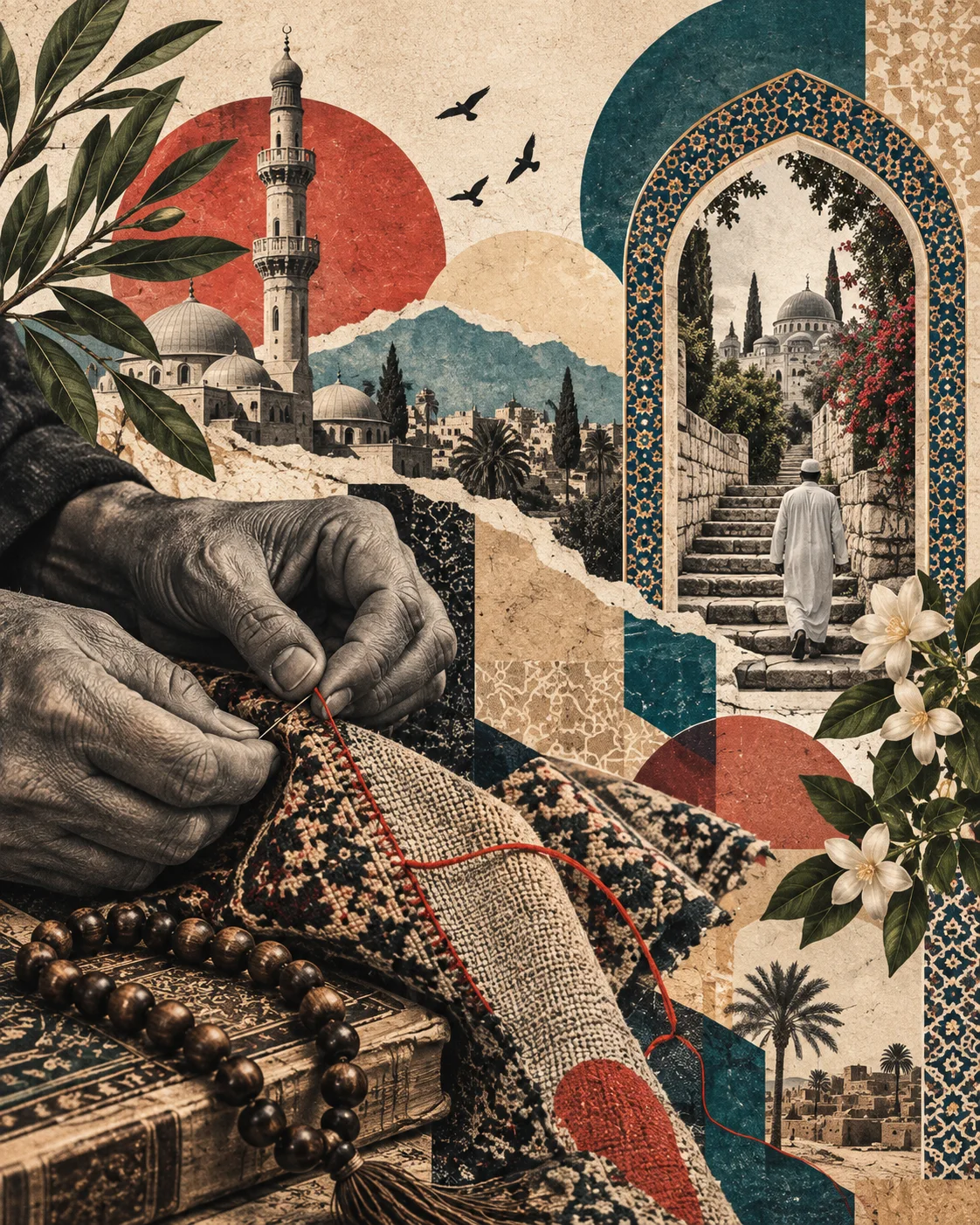
Repentance is easy to flatten into one of two pictures: permanent shame, or a declaration that the past no longer matters. The Islamic vocabulary of tawbah points toward a different question. What does it mean to turn back to God and toward changed conduct while still taking responsibility for what has happened?
The question is religious, ethical and deeply personal. The sources discussed here offer a vocabulary for hope and responsibility without claiming that everyone experiences renewal in the same way. Omar Afra’s welcome essay speaks in a personal register; this guide explains the religious concepts rather than treating any one life as proof of a general claim.
Mercy is not the same as denial
Qur’an 39:53–54 joins an invitation not to despair of divine mercy with the call to return to God. The passage does not present hopelessness as a spiritual achievement. It also does not reduce repentance to a reassuring sentence detached from a change in direction.[1]
Qur’an 25:70–71 connects repentance with faith and good action. This provides a scriptural basis for thinking about renewal as more than a public claim of sincerity. A person’s inward relationship with God cannot be measured by a newsroom, but conduct and responsibilities in the world remain subjects that people can examine.[2]
The distinction matters because mercy can be misused in either direction. A claim of forgiveness can be treated as permission to avoid repair, or the possibility of forgiveness can be denied so completely that a person is understood as permanently identical to their worst period. Neither position is necessary for taking harm seriously.
Responsibility remains particular
If another person has been harmed, a declaration of repentance does not automatically determine what they should feel, whether they should forgive or how quickly trust should return. Repair can be offered; changed conduct can be sustained; some consequences may remain. Religious hope should not become a demand that another person provide reassurance.
The same principle applies to institutions. An organization’s statement of changed values should be evaluated alongside its policies and behavior. A spiritual vocabulary is not a substitute for answering a specific question about an obligation, a record or an alleged act.
This is not a method for adjudicating any particular person’s life from a distance. It is an ethical distinction: renewal concerns a changed direction, while accountability concerns what that direction requires in relation to others. Treating the two as enemies makes both less serious.
What prayer contributes within the religious account
Salah gives religious attention a repeated place in the day. Its forms include recitation and bodily movement, undertaken as worship rather than merely as a technique for improved productivity. A believer may experience that rhythm as a way to interrupt distraction, remember obligations or return to an intention that ordinary life has scattered.[3]
Those are descriptions of religious meaning and possible personal experience, not clinical outcome claims. A publication should not promise that prayer cures a mental-health condition, resolves a legal problem or repairs a damaged relationship by itself. Someone may find religious support valuable while also needing appropriate professional help.
The distinction protects the practice from being sold as a universal treatment. It also protects people from being told that continuing difficulty proves deficient faith. A meaningful religious commitment does not make every form of suffering easy to explain or eliminate.
Remembrance and the life of the heart
Dhikr means remembrance of God. Qur’an 13:28 relates remembrance to reassurance of the heart, and 33:41–42 calls for frequent remembrance. These passages form part of the scriptural background for practices of attention and recitation.[4][5]
Sufi traditions develop this vocabulary through different communities, teachers and disciplines. A gathering may use quiet or audible forms of remembrance, and not every Muslim who practices dhikr belongs to a Sufi order. Describing one ceremony as the universal shape of Muslim spirituality would erase the variation.[6]
The inward emphasis should not be mistaken for withdrawal from responsibility. A claim to humility means little if it merely supplies a more flattering self-image. The question is whether attention to the self leads to greater honesty, patience and care in actual relationships. That is an ethical challenge, not an outcome a publication can certify from the atmosphere of a gathering.
Sufism is not an escape from being Muslim
It is tempting to present Sufism as the acceptable, poetic version of a supposedly uniformly severe religion. That contrast misdescribes the tradition. Many practitioners understand inward cultivation and outward worship as connected. Their spirituality is not necessarily an attempt to leave Islamic obligations behind.[7]
There are also genuine disagreements within Islam about devotional forms, teachers and authority. A respectful account should identify those disagreements rather than declaring one community automatically authentic and another fraudulent. The task of a reference publication is explanation, not religious adjudication.
Nor does spiritual authority exempt a teacher from scrutiny. Finances, boundaries, safeguarding and representations remain legitimate subjects. A practice can be meaningful while an institution is imperfect or a leader’s claim is unsupported. Reverence and accountability do not need to cancel one another out.
Return has an ordinary setting
Spiritual language can sound remote until it meets a familiar obligation. A promise kept, an apology that does not demand applause, or a decision to stop repeating a harmful pattern can make the meaning of return more concrete. These are examples for reflection, not a checklist by which strangers can certify a person’s inward state.
Regular practice can give intention a place to return when attention wanders. The meaning of prayer is not exhausted by that practical description, but the connection helps a newcomer understand why repetition need not mean emptiness. What matters is not simply doing something again; it is attending to what the act asks of the person doing it.
Readers can continue with the guides to daily prayer, Sufism and divine mercy and judgment. Their questions overlap without becoming interchangeable. Worship, forgiveness and treatment of other people belong in the same conversation.
Change is neither a slogan nor an impossibility
The religious account described here leaves room for a person to become different without declaring that every consequence disappears. It treats despair as something other than the only honest response to failure, and responsibility as something other than a permanent identity of condemnation.
For a reader outside Islam, these ideas can be understood without adopting the theology. For a believer, they may belong to ongoing practice rather than a conclusion reached once. In either case, the serious question concerns how an intention becomes conduct over time.
Prayer and repentance do not need to be presented as magical exemptions from ordinary life to matter within it. Their force can lie in the work of returning: to attention, to obligations, to truthfulness and to the possibility that a person’s future need not merely repeat the past. That possibility is not a certificate of innocence. It is a demanding account of hope.